Dubai office properties: Which areas could maximise your investment?
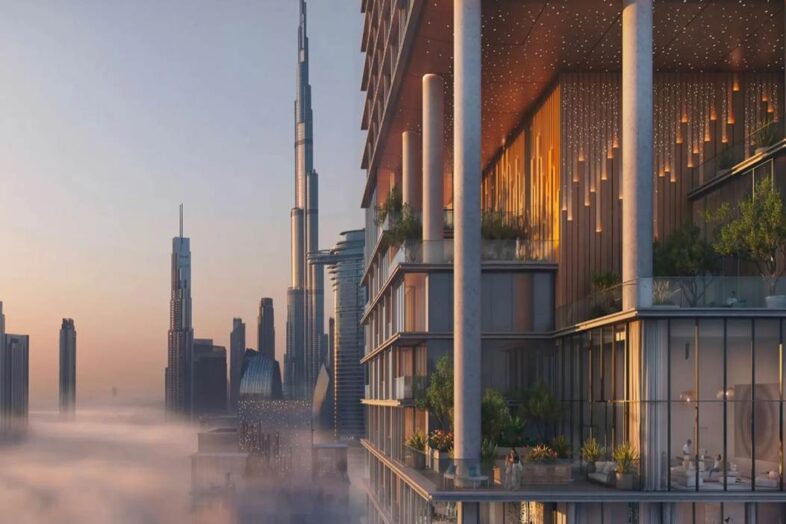
Analysts suggest that Dubai’s commercial market is entering a mature growth phase, supported by both domestic and international investor interest Dubai’s commercial property sector continued to demonstrate strong momentum in the third quarter of 2025, achieving total sales of Dhs30.38bn, representing a 31 per cent increase year-on-year, according to CRC Property’s recently released Q3 2025 Market Report. This robust performance underscores Dubai’s enduring appeal as a global business hub and reflects sustained investor confidence in the city’s commercial real estate sector, across office, retail, and industrial segments. The surge in activity comes against the backdrop of Dubai’s wider economic resilience, continued corporate relocation trends, and targeted infrastructure investments across business hubs, free zones, and mixed-use districts. Analysts suggest that Dubai’s commercial market is entering a mature growth phase, supported by both domestic and international investor interest, as well as sustained demand from SMEs and corporates seeking ownership over leasing. The office sector emerged as the clear driver of growth in Q3 2025, recording total sales of Dhs3.1bn across 1,153 units, an 18 per cent quarter-on-quarter increase and a remarkable 93 per cent rise year-on-year. Transaction volumes similarly advanced, with the number of deals climbing 19 per cent quarter-on-quarter and 45 per cent year-on-year, signalling strong investor confidence and demand from businesses for prime office locations. Yogesh Yerikireddi, JLT Area Manager at CRC, highlighted the dynamics behind this growth: “The Dubai office market remained exceptionally strong through Q3 2025, led by record demand for Grade A and ESG-compliant towers. With vacancy at historic lows, fitted and vacant commercial offices for sale are seeing unprecedented investor interest. Limited premium supply, coupled with strong corporate relocations and expansion demand, continues to push rents and capital values upward across key free zones.” Business Bay led office transactions with 328 deals, followed by Jumeirah Lakes Towers (JLT) at 277 transactions. Majan and Jumeirah Village Circle (JVC) recorded 112 and 110 deals respectively, while Barsha Heights (Tecom) rounded out the top five with 71 transactions. This distribution underscores Dubai’s continued decentralisation of commercial activity, with high-quality office offerings now increasingly spread across emerging mixed-use hubs, not just the traditional central business districts. Smaller-ticket strata offices drive volume growth Despite the increase in transactions, the total quarterly value for commercial sales edged down slightly by 2 per cent, reflecting a trend toward smaller-ticket assets. Offices priced between Dhs1.5–2m rose 34 per cent quarter-on-quarter, while smaller units in the Dhs500,000–1 m range jumped 50 per cent quarter-on-quarter, suggesting growing demand from SMEs, start-ups, and expanding businesses seeking affordable office spaces. CRC’s data also points to a shift in investor strategy: diversification into strata offices is providing attractive yields while enabling occupiers to expand their own footprints, a trend increasingly evident in high-demand locations such as JLT and Business Bay. The Q3 2025 report also highlighted sustained off-plan activity, with total transactions reaching Dhs2.4bn ($650m) across 1,101 deals, of which office and retail developments contributed Dhs1.86bn through 640 transactions. This activity reflects continued investor confidence and healthy absorption in Dubai’s commercial market. Looking ahead, Dubai’s office landscape is set to benefit from approximately 680,000 square meters of new supply scheduled for delivery by 2027, primarily concentrated in high-demand areas such as Business Bay and Motor City. Analysts predict this pipeline will support continued rental growth while meeting rising occupier demand. Among the notable new developments is Lumena Alta by Omniyat, a 73-storey tower in Business Bay with 78,000 square metre of premium office space, 18 double-deck elevators, and 1,000 parking spaces. The development will feature luxury amenities, including a signature restaurant, sky pool, and fitness centres, with handover slated for Q1 2030. Another high-profile launch is HQ by Rove, in Marasi Bay, covering 500,000 square foot across 23 office floors. The building will include modular office units, 14 high-speed lifts, EV charging stations, bicycle parking, and a first-of-its-kind moving café elevator, scheduled for completion in Q1 2029. These projects reinforce Dubai’s focus on innovative, flexible, and ESG-compliant office solutions. Retail market rebounds strongly The retail segment also saw a sharp resurgence in Q3 2025, with total transaction value reaching Dhs1.15bn across 437 deals, marking a 95 per cent increase quarter-on-quarter and 55 per cent year-on-year rise. Transaction volumes climbed 88 per cent quarter-on-quarter and 37 per cent year-on-year, demonstrating renewed confidence among both investors and end-users. Liza Esenbek, Head of Retail and F&B at CRC, noted: “This momentum in the retail segment is powered by high-net-worth tourism and a growing consumer demand for value-driven, personalised, and experiential concepts. Notably, the health and wellness segment, spanning premium fitness, specialty food, and recovery, is outperforming other categories and fuelling prime leasing demand across the city.” International City led retail transactions with 85 deals, followed by Majan at 66 transactions. Business Bay and JVC recorded 45 and 43 deals respectively, while Dubai Marina maintained steady activity with 27 premium retail sales. This spread of activity illustrates broad-based demand across both established and emerging districts, and signals that Dubai’s retail market is successfully adapting to evolving consumer behaviour and investor priorities. Average selling prices for secondary offices in Dubai surged to Dhs1,685 per sq. ft in Q3 2025, marking a 19 per cent year-on-year increase and the highest levels observed in over a decade. This appreciation reflects strong demand for Grade A strata offices, limited ready supply, and sustained investor confidence in key business districts such as Business Bay and JLT. After years of steady recovery since the 2019–2020 trough, prices have now surpassed pre-2015 levels, signaling that Dubai’s commercial property market has firmly rebounded and remains highly attractive for both institutional and private investors. Buyer and tenant trends Buyer and tenant activity in Q3 2025 presented a mixed picture. Overall buyer leads increased 47 per cent year-on-year, demonstrating continued investor confidence, yet declined 18 per cent quarter-on-quarter, reflecting a short-term adjustment after robust first-half activity. Office leads rose 51 per cent year-on-year but fell 16 per cent quarter-on-quarter, while retail enquiries declined 29 per cent year-on-year and 28 per cent quarter-on-quarter. Warehouse demand remained broadly stable, with only minor fluctuations. Tenant activity followed a similar trend, with overall leads up 54 per cent year-on-year but easing 12 per cent quarter-on-quarter, indicating a natural seasonal moderation. The office segment saw 46 per cent year-on-year growth, while retail …