

- April 22, 2026
- 5
- Real Estate
By Kiana Jehangir
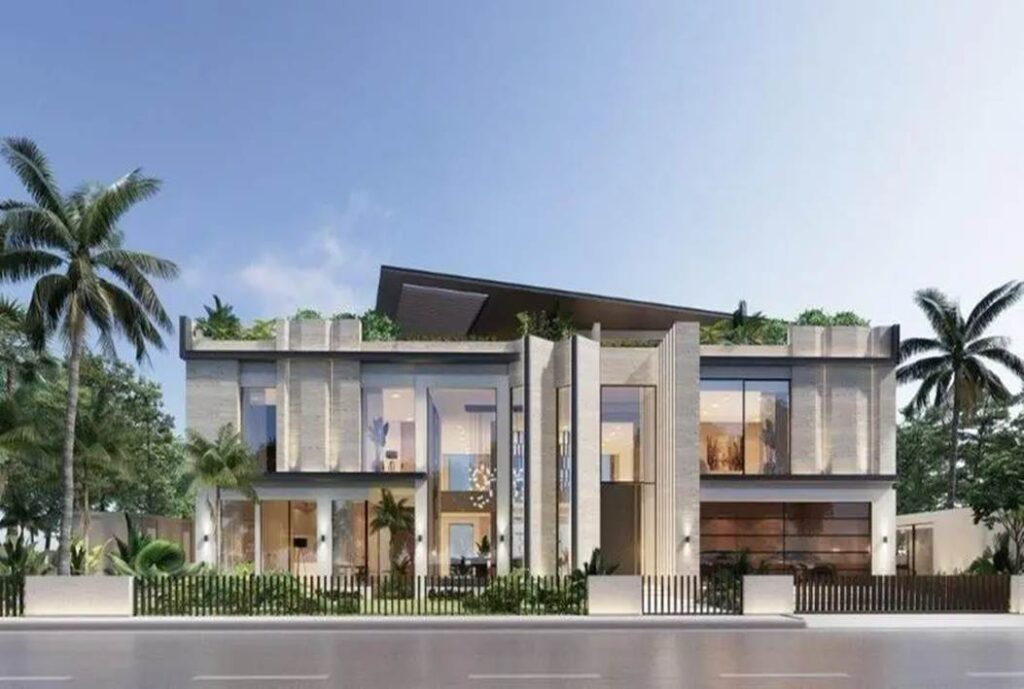
Dubai’s luxury residential sector is undergoing a subtle but significant transformation: the explosion of high-end property renovation. Once the domain of boutique villas and celebrity homes, luxury refurbishment is now a mainstream strategy for homeowners, investors and relocating families — and the data tells the story.
From May 2022 to today, villa and townhouse average prices in Dubai jumped from AED 3.4 million to AED 6.6 million – a leap of approximately 92%. In the first half of 2025, the emirate recorded AED 260 billion in real estate transactions, with secondary-market sales up 46% year-on-year. The first half total real estate sales reached AED 431 billion, representing a 25% increase over the previous year.
These figures underline a market where renovation-led value creation, end-user demand, and location-driven asset appreciation are converging. In short: luxury renovation is no longer just cosmetic — it is strategic.
_________________________________________________________________________________
Table of Contents
- Why Renovation Has Become a Luxury Market Focus
- Key Numbers & Trends Driving the Segment
- Who Is Renovating — and Why?
- Core Challenges Behind the Scenes
- How to Navigate a High-End Renovation Successfully
- What This Means for Dubai’s Luxury Real Estate Ecosystem
- Conclusion
_________________________________________________________________________________
1. Why Renovation Has Become a Luxury Market Focus
Several dynamics have driven renovation to the forefront of Dubai’s luxury real-estate playbook:
- Rapid price appreciation in prime locations has made upgrading existing homes more attractive than buying new.
- Supply constraints of ultra-prime land mean homeowners are opting to refurbish rather than relocate.
- End-user buyers, not pure speculators, are now dominant — they demand bespoke layouts, wellness amenities, and architectural finesse.
- Lifestyle migration – returning families, relocating entrepreneurs and global investors treat homes as long-stay residences, so interior quality becomes a priority.
What was once viewed as a niche luxury accessory is now a full-scale market segment in its own right.
_________________________________________________________________________________
2. Key Numbers & Trends Driving the Segment
The numbers paint a clear picture of momentum:
- Average villa/townhouse sales price jumped to AED 6.6 million from AED 3.4 million since May 2022.
- Secondary-market sales in H1 2025 rose 46% compared to H1 2024.
- Total real-estate transactions in H1 2025 reached AED 431 billion, up 25% year-on-year.
- The luxury renovation market is no longer reserved for ultra-wealthy alone — first-time high-end purchasers, families and investors are participating.
- Renovation firms report increased complexity: bespoke materials, smart home integration, wellness-oriented services, and higher expectations on finish-quality.
_________________________________________________________________________________
3. Who Is Renovating — and Why?
The profile of renovation clients in Dubai has shifted:
- Investors looking to refurbish existing properties to capture resale uplift and rental yield.
- End-user homeowners who purchase older prime homes and refurbish to ‘brand new’ modern luxury standards.
- Relocating families (especially from Europe, GCC, Asia) turning homes into long-term residences, requiring high-quality finishes and lifestyle fit.
- Even more regular buyers, not just ultra-rich, are now taking on renovation because they prefer customizing an existing asset rather than buying new.
These segments reflect an important shift: renovation is no longer about only aesthetics — it’s about asset enhancement, lifestyle anchoring and value preservation.
_________________________________________________________________________________
4. Core Challenges Behind the Scenes
While the sector is booming, renovation at this level is not without its hurdles:
- Structural surprises: Hidden issues in older homes (plumbing, wiring, load-bearing elements) cause delays.
- Material and labour supply: Custom luxury finishes and high-end workmanship create risk of delays or cost overruns.
- Quality control and snagging: Final finishes matter — the ‘snag list’ phase is critical but often underestimated.
- Choosing the right contractor: The difference between a run-of-the-mill refurb and a true luxury overhaul lies in process, communication, transparency and execution.
- Scope creep and budget escalation: Many start with design renderings only to run into unforeseen complexity halfway through.
These hidden realities highlight that luxury renovation is a specialist service — and not all providers deliver to the expected standard.
_________________________________________________________________________________
5. How to Navigate a High-End Renovation Successfully
For homeowners, investors or relocating families planning a luxury renovation in Dubai, a few principles stand out:
- Select a contractor with clear track record, transparent processes and rigorous snagging practice.
- Ensure detailed design and material specification upfront — bespoke finishes, smart home integration, acoustics, lighting, wellness features.
- Plan for contingency time and budget — structural surprises or sourcing bespoke items will take longer.
- Prioritise lifestyle fit: layout, light, views, outdoor-indoor flow, materials, and finishes matter as much for living as they do for resale.
- Think long-term ownership: if you will live in the home for 5–10 years or more, quality matters more than cost-saving shortcuts.
A luxury home renovation in Dubai is not just about aesthetic uplift — it’s about value engineering for lifestyle and legacy.
_________________________________________________________________________________
6. What This Means for Dubai’s Luxury Real Estate Ecosystem
The expansion of the renovation market signals a few broader take-aways for Dubai’s luxury sector:
- Existing stock of premium homes is becoming as important as new launches. Value can now be created via refurbishment and repositioning.
- Developers and homeowners alike will increasingly focus on architecture, craftsmanship, materiality, wellness and personalization, rather than just “which tower” or “which view”.
- The market is maturing: luxury homes are now about livability and quality, not only premium pricing and headline growth.
- For investors, repositioning via renovation presents a compelling path to value — especially when land supply is constrained and new-build premiums high.
In short: the luxury home in Dubai is not simply the product you buy, but the product you live in and refine.
_________________________________________________________________________________
7. Conclusion
Dubai’s luxury renovation market has matured from the fringes into a mainstream strategy — aligned with a broad buyer base, deep investor interest and a lifestyle-driven market mindset. With average prices nearing AED 6.6 million for villas and townhouses, and transaction volumes continuing to climb, the logic of renovation is clear: upgrade the asset, personalise the experience, and secure long-term value in a luxury‐anchored home.
For homeowners, investors and design-conscious buyers alike — the opportunity lies not only in where you live, but howyou live. In Dubai, the luxury home is increasingly less about location alone, and more about refinement, longevity and design intent.
