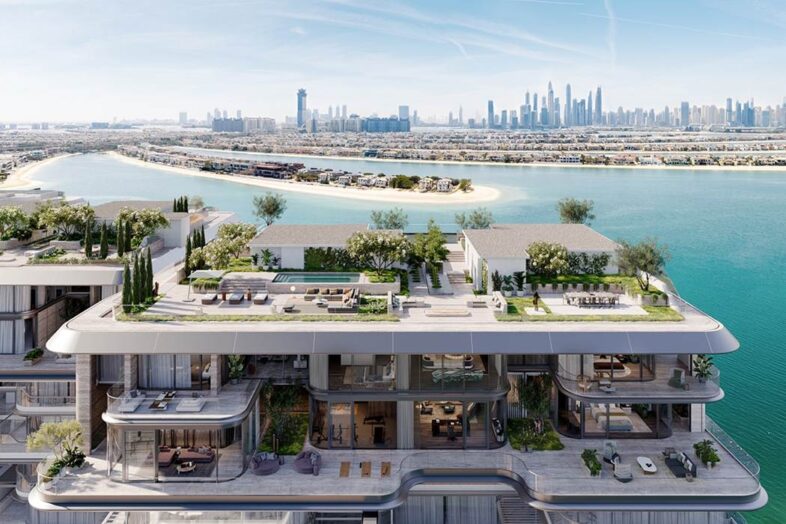
Dubai Real Estate Market Review 23-Apr-2026

Dubai Real Estate Investment Strategy for USD 10 Million

Prepared for clients of The Noble House Real Estate LLC Focused on Beyond Developments, Select Group, SOL Developer, and Dubai Properties Group Executive Summary Dubai remains one of the most compelling real estate investment markets globally for large private investors because it combines tax efficiency, strong transaction liquidity, visible population growth, infrastructure expansion, and a broad spectrum of asset strategies ranging from high-yield apartments to waterfront appreciation plays. For a USD 10 million investor, the most prudent strategy is not single-project concentration but a diversified allocation across stability, yield, and appreciation sleeves anchored by developers with distinct market roles. In this framework, Select Group is best positioned as the premium stabilizer, Beyond Developments as the waterfront appreciation engine, SOL Developer as the yield-plus growth sleeve, and Dubai Properties Group as the institutional-confidence and scale component. Together, these developers allow the portfolio to capture different parts of Dubai’s real estate cycle while maintaining presentation credibility for sophisticated investors. Dubai Real Estate Market Explained Dubai’s real estate market is driven by a combination of end-user demand, expatriate population growth, business formation, international capital inflows, tourism, and infrastructure-led urban expansion. Unlike many global cities, Dubai offers investors access to both maturing prime districts such as Dubai Marina and fast-rerating growth districts such as Dubai Maritime City, JVT, and several mixed-use corridors influenced by long-term planning policy. The market is also unusually transparent by regional standards because investors can benchmark against Dubai Land Department transaction reporting, price indices, and active resale listings. This improves investor confidence because it allows underwriting to be based on real transaction evidence rather than only on promotional pricing. Progression of the Dubai Market Since 2020 The 2020 period marked a cyclical low for Dubai residential pricing. Market data cited in 2026 reporting shows average price per square foot at roughly AED 872 in early 2020, rising to approximately AED 935 in 2021, then accelerating to AED 1,555 in 2024 and AED 1,692 in 2025, with February 2026 levels around AED 1,667 per square foot. This progression demonstrates a major repricing of the market rather than a short-lived post-pandemic bounce. Transaction value growth reinforces the same conclusion. Dubai recorded over 84,196 transactions worth almost AED 300 billion in 2021, H1 2025 sales worth AED 262.7 billion, and full-year 2025 transaction value reported at AED 682.5 billion across more than 214,000 sales, indicating both capital depth and persistent participation. What Investors Need to See for a USD 10 Million Ticket Dubai 2040 Urban Master Plan and Why It Matters The Dubai 2040 Urban Master Plan is central to any long-horizon investor presentation because it gives a planning-led explanation for future demand. Official and closely aligned planning sources describe a pathway toward approximately 7.8 million residents by 2040, development of five urban centres, expansion of green and recreational space, and a more integrated approach to land use, transit, and mixed-use living. For investors, the significance is straightforward: long-term planning supports a continued need for housing, transport-linked communities, waterfront regeneration, and mixed-use districts. It also suggests that demand will not be distributed evenly; projects aligned with major urban centres, lifestyle corridors, and infrastructure access should continue to command stronger pricing power. Demand, Supply, and Outlook Dubai’s outlook remains constructive because demand growth is being driven by population expansion, business relocation, tourism, and the city’s status as a global safe-haven market. At the same time, supply remains an essential underwriting variable: segments with heavy off-plan launches may face short-term pressure at handover, while differentiated waterfront and premium integrated communities are more likely to retain pricing resilience. The practical investor conclusion is that demand is strong enough to support the market overall, but returns will vary sharply by developer, district, entry point, and unit type. This is why portfolio construction across several developers is superior to concentrating all capital in one narrative-driven launch. Developer Analysis Beyond Developments Beyond Developments should be framed as the appreciation-led waterfront opportunity. Market data sources show a growing pipeline of Beyond projects in Dubai Maritime City and other prestige locations, including Saria, Kanyon, Sensia, Talea, Soulever, and Passo, with launch prices ranging from roughly AED 1.7 million to AED 5.5 million depending on project and unit type. The investor case for Beyond is strongest when presenting early-stage district transformation. Dubai Maritime City is still in the process of being fully institutionalized as a premium waterfront residential market, which means investors are underwriting future district maturation, scarcity, and improved lifestyle positioning rather than only immediate stabilized yield. Beyond therefore fits investors who can tolerate a medium-term hold and want stronger capital appreciation potential. The key risks are delivery timing, area supply concentration, and reliance on future district rerating. Select Group Select Group should be presented as the most established premium anchor among the compared developers. The company has a long operating history, a portfolio exceeding 20 million square feet, and flagship projects such as Marina Gate, The Torch, Studio One, Peninsula, and Six Senses Residences Palm Jumeirah. Its strongest investor advantage is the quality of comparable evidence. Select projects sit in markets such as Dubai Marina and central waterfront zones where tenants, buyers, and brokers understand the product, making both rental and exit assumptions easier to defend in front of investors. Select is therefore appropriate for the stability sleeve of the portfolio. It may not produce the highest yield on every unit, but it offers premium liquidity, better downside defense, and stronger confidence for investor committees. SOL Developer SOL Developer is best described as a yield-plus and growth-corridor developer with construction-backed roots. The business benefits from related contracting experience and is frequently positioned around product in districts such as JVT where investors are seeking more attractive basis levels than prime waterfront stock. SOL Levante is currently the clearest investor-facing example, with project commentary pointing to launch pricing around AED 780,000 for certain configurations and expected yields near 8 percent, while broader JVT area returns are often cited in the mid-6 percent range depending on unit type and operating assumptions. SOL …
Dubai Real Estate Weekly Market Analysis 20-Apr-2026

Tax Structuring Options for a USD 10 Million US Investor in Dubai Real Estate

Prepared for The Noble House Real Estate This memorandum is designed for investor presentation use and summarizes the principal tax-efficiency considerations for a US investor evaluating direct ownership, US-entity ownership, and UAE-entity ownership of Dubai real estate. It is written as a commercial overview and should be read alongside formal legal and tax advice before execution. Executive Overview Dubai is attractive to US investors because the UAE generally does not impose personal income tax on rental income, capital gains tax on direct individual property sales, or annual property tax in the way many US jurisdictions do. As a result, the local tax drag on Dubai real estate can be materially lower than on comparable investments in many other markets. For a USD 10 million investor, the primary structuring question is not whether Dubai is locally tax-efficient, but whether the assets should be held personally, through a US pass-through structure, or through a UAE vehicle. Each route creates different outcomes for liability, US reporting, estate planning, and potential exposure to UAE corporate tax. 1. Direct Personal Ownership In a direct personal ownership model, the investor acquires the Dubai properties in his or her own name. This is often the cleanest and most tax-efficient route for a single investor or family office making passive real estate investments. From the US side, the investor still reports worldwide rental income and capital gains. Rental income is generally reported on Schedule E, and foreign residential real estate is usually depreciated over 30 years under US rules. This means the UAE tax advantage mainly comes from removing the local tax layer, while the IRS still taxes the income and gains. The downside is that the property remains in the investor’s personal estate and does not provide the governance or liability separation that some larger investors prefer. 2. US Holding Structure In a US holding structure, the investor uses a US entity such as an LLC, partnership, or other pass-through vehicle to hold the Dubai assets. This approach is often used when there are multiple family members, co-investors, or financing requirements that benefit from formal governance and ring-fencing. For tax purposes, a pass-through US LLC or partnership usually preserves the same broad US tax result as direct ownership, while giving the investor better structuring flexibility. This route is often preferable where the investor wants clean accounting, creditor separation, or a family-office-style investment platform. 3. UAE Structure In a UAE structure, the investor holds the property through a UAE company, SPV, or another local legal vehicle. This can be useful when local financing, local counterparties, or operational complexity make a local vehicle commercially attractive. For many single US investors, a UAE corporate structure is not the default tax-optimal route because it can introduce local corporate tax and a more complicated US compliance profile. It is usually chosen for strategic or operational reasons rather than for simple tax minimization. Comparison for Investor Presentation Structure UAE tax efficiency US simplicity Liability / governance Best use case Personal ownership High High Low to medium Single investor or family office seeking simplicity US pass-through structure High Medium High Multi-asset portfolio, governance, financing, co-investors UAE entity Medium Low High Operational or local commercial reasons Practical Recommendation For most USD 10 million US investors buying Dubai residential real estate as a passive investment, the two most commercially sensible structures are either direct personal ownership or a US pass-through holding entity. These options generally preserve Dubai’s local tax advantages while avoiding unnecessary complexity. A UAE holding company can still be appropriate, but usually only where there is a specific local financing, operational, or investor-relations rationale. It should not be assumed to be the most tax-efficient route without dedicated cross-border tax advice. Important Note This document is a commercial overview prepared for investor discussion. Final implementation should be reviewed by US and UAE tax counsel, especially where the investor may use debt, trusts, multiple family members, co-investors, or corporate holding vehicles.

Dubai Real Estate Market Review 22-Apr-2026

Dubai Real Estate Market Review: March 2026

March 2026 Sees Market Pullback as Transaction Value Slips Sharply from February In March 2026, Dubai recorded a total transacted value of AED53.37 billion across 16,855 transactions. Off plan led with AED23.52 billion (44.1%), while Ready contributed AED10.50 billion (19.7%) and Land added AED19.34 billion (36.2%). Compared with February 2026, total value fell 29.2% from AED75.37 billion, while transaction count declined 19.2% from 20,852. Against March 2025, total value was down just 13% from AED61.19 billion. Category Value (AED bn) Share of Monthly Total Off-Plan 23.52 44.1% Ready 10.50 19.7% Land 19.34 36.2% Total 53.37 100.0% Category Off-Plan (AED Millions) Ready (AED Millions) Flat 18,197.2 6,939.9 Villa 3,399.7 2,328.0 Hotel Apt. & Rooms 97.4 437.0 Commercial 1,827.8 798.6 Total 23,522.1 10,503.5 Off-Plan Market Performance Category Value (AED bn) % of Off-Plan Flat 18.20 77.4% Villa 3.40 14.5% Hotel Apt. & Rooms 0.10 0.4% Commercial 1.83 7.8% Total 23.52 100.0% March’s off-plan market remained overwhelmingly apartment-driven, with flats alone generating more than three-quarters of segment value. Villas added a healthy secondary layer, while commercial stock also made a meaningful contribution, showing that investor appetite was not limited to residential launches. Top Performing Off-Plan Areas By number of transactions, activity was led by more affordable and high-absorption districts: By value traded, the ranking shifted toward larger-ticket and strategic master-planned locations: This split is important: transaction volume was concentrated in broad-market absorption zones, while value concentration tilted toward premium and strategic locations. In other words, March’s off-plan market had both width and depth. Top Performing Off-Plan Projects The top 10 off-plan projects generated AED4.91 billion, equal to about 20.9% of total off-plan value. The leaders were: At the micro level, the off-plan market’s biggest single flat transaction came from Aman Residences in Jumeirah Second at AED422 million, underlining how a handful of ultra-prime deals can materially lift monthly value even when broader transaction volumes are spread across mid-market communities. Ready Market Performance Category Value (AED bn) % of Ready Flat 6.94 66.1% Villa 2.33 22.2% Hotel Apt. & Rooms 0.44 4.2% Commercial 0.80 7.6% Total 10.50 100.0% The ready market was also led by flats, though less heavily than off-plan. Villas accounted for a much larger share here, reflecting the role of the secondary market in end-user and luxury villa transactions. Relative to off-plan, the ready segment showed a more balanced mix across residential, hospitality-linked, and commercial assets. Top Performing Ready Areas By number of transactions, the most active ready-market districts were: By value traded, prime and mature communities dominated: This tells a clear story: JVC and Majan were volume engines, but Dubai Marina, Business Bay, Burj Khalifa, and Palm Jumeirah carried the pricing power. Top Performing Ready Projects The top 10 ready projects generated AED1.42 billion, or about 13.6% of total ready value. The leaders were: The concentration here was lower than in off-plan, suggesting the ready market’s value was spread across a wider set of projects and communities. Land Market Performance Land remained a major pillar of March activity, accounting for more than a third of all transacted value. Top Performing Land Areas by Value Land clearly played an outsized role in shaping the month’s overall value; however, it was smaller than the previous months. Without land, the market would have stood at AED34.03 billion, meaning land was the swing factor behind March’s aggregate scale. Highest Transaction Value Segment Asset Type Area / Project Value Off-Plan Flat Jumeirah Second (Aman Residences) AED422,000,000 Off-Plan Villa Wadi Al Safa 3 (Karl Lagerfeld Villas By Taraf) AED43,421,000 Ready Flat Bluewaters AED90,000,000 Ready Villa Palm Jumeirah (EOME) AED100,000,000 Land Land Sufouh Gardens AED705,000,000 These headline transactions show that ultra-prime stock and strategic land parcels continued to anchor the top end of the market, even as mass-market districts drove a large share of the monthly deal count. Transaction Type Ex-Land Transaction Type Off-Plan Ready Gifts AED163.2 million AED676.3 million Mortgage AED107.5 million AED4.24 billion Sales AED23.25 billion AED5.59 billion Off-plan value was almost entirely sales-led: Ready market value was far more balanced: That gap is structurally important. The off-plan market remains primarily a developer-sales market, while the ready segment reflects a more mature financing-backed resale market. On The Micro Level Monthly Comparison Metric Feb 2026 Mar 2026 Change Total Value AED75.37 bn AED53.37 bn -29.2% Transactions 20,852 16,855 -19.2% Metric Mar 2025 Mar 2026 Change Total Value AED54.08 bn AED61.19 bn -13% Market Insights & Outlook March 2026 showed a softer month-on-month profile versus February largely due to the current geopolitical concerns, with both value and transaction count pulling back, the year-on-year comparison wasn’t much different. The structure of the month was notable: off-plan remained the main transactional engine, ready retained depth in core urban districts, and land continued to command a very large share of capital deployment. The area rankings also reveal a two-speed market. High-volume communities such as Madinat Al Mataar, Al Yelayiss 1, JVC, and Majan drove deal flow, while prime districts such as Jumeirah Second, Palm Jumeirah, Dubai Marina, and Business Bay captured disproportionate value. That combination points to a market that still has both speculative breadth and premium depth. For April, the key question is whether transaction activity rebounds from March’s lower base, especially in secondary market volume, or whether the market remains more selective with value increasingly supported by large land and trophy transactions rather than broad-based acceleration. Data Source: Dubai Land Department *Only freehold transactions were used

Dubai Real Estate Market Review 24-Apr-2026

Dubai Real Estate Market Review 02-Apr-2026

Modon to cover registration fees for all residential units bought in March Dubai real estate: Off-plan apartment sales hit $4.77 billion in March, up 12.9 percent Dubai’s March 2026 off-plan apartment market stayed strong: sales rose 12.9% year-on-year to AED17.5bn, with deal volume up 2.3% to 7,983. Dubai Islands led by value, Madinat Al Mataar by volume, while Aman Residences Dubai dominated the luxury segment with record-ticket transactions. Read The Full Article on Economy Middle East Dubai records Dh1b-plus land deal in Palm Jumeirah Dubai recorded a landmark Palm Jumeirah land sale above Dh1 billion at Royal Amwaj. Total real estate activity hit Dh3.18 billion, led by Dh1.73 billion in sales. Q1 2026 sales rose 23.85% year-on-year to Dh175.88 billion, showing resilient investor confidence. Read the full article on Gulf News Danube Properties unveils AED 3.5mln+ ‘Greenz’ Master Community in Dubai’s high-growth Academic City Danube launched Greenz By Danube, its first large master-planned community in Dubai International Academic City. Offering villas and townhouses from AED3.5 million, the project targets families and investors, with 50+ amenities, a 1% monthly plan, and handover expected in Q4 2029. Read the full article on Zawya Dubai leads UAE in luxury-branded residential positioning at 88%, new industry analysis finds Illustrado’s new report says Dubai leads the UAE in luxury-led residential marketing, with 88% of projects using premium positioning. It warns of growing “luxury sameness,” making differentiation harder and pushing competition toward price, delivery, and brand credibility. Read the full article on Gulf News Dubai’s haus & haus and EIGHTClouds launch structured real estate push haus & haus and EIGHTClouds have partnered to bring institutional-style real estate investing to the UAE. Their new open-ended residential fund targets stable income and long-term growth, reflecting a market shift toward diversified, professionally managed portfolios and disciplined execution. Read the full article on Arabian Business NKEY Architects expands UAE footprint to 250+ active projects NKEY Architects says it is expanding from its Dubai base, with 250+ active UAE projects and 150+ staff. The firm sees strong growth in luxury residential design, while using Dubai as a hub to manage projects across the Middle East and more than 45 countries. Read the full article on Middle East Construction News Neoterra Developments breaks ground for ELMORA; unveils next project in Dubai Production City Neoterra has broken ground on ELMORA at Jumeirah Garden City, a Dh130 million boutique residential tower due in February 2028 and already nearly 80% sold. The launch signals the developer’s wider Dubai expansion, with a second project planned in Dubai Production City in Q2 2026. Read the full article on Gulf News Modon to cover registration fees for all residential units bought in March Modon will cover registration fees for all residential units bought in March, rewarding buyer confidence. The move follows strong 2025 results, with AED13.8 billion in revenue and AED3.9 billion in net profit, as the developer continues aligning its growth strategy with Abu Dhabi’s long-term economic agenda. Read the full article on Zawya UAE tenants delay renewals: Expert reveals how to negotiate and get the best rents Tenants in Dubai and Abu Dhabi are gaining some negotiating power as short-term rental weakness and shifting sentiment soften parts of the market. Experts say rents remain high, but conditions are becoming more balanced, with some residents delaying renewals or seeking shorter, more flexible lease terms. Read the full article on Khaleej Times Palma completes work on premium Palm Jumeirah residential project Palma has completed Serenia Living on Palm Jumeirah, with handovers now starting. Launched at AED3 billion in 2022, the ultra-premium beachfront project has doubled in value to over AED6 billion, highlighting strong demand for high-end waterfront homes in Dubai. Read the full article on Zawya Dubai Real Estate Transactions as Reported on the 1st of April 2026 On the 01-Apr-2026, the total transacted value reached AED 2.48 billion. Off-plan dominated with AED 2.06 billion (82.9%), while Ready accounted for AED 425.7 million (17.1%). Category Off-Plan (AED millions) Ready (AED millions) Flats 1,339.5 271.7 Villas 83.3 92.3 Hotel Apt. & Rooms 5.4 17.7 Commercial 629.9 44.0 Total 2,058.1 425.7 Off-Plan Market Performance Total Value: AED 2.06 billion Off-plan activity was heavily led by flats, but the standout feature of the day was the unusually strong commercial contribution. Lumena Alta by Omniyat alone generated about AED 545.3 million from the listed office sales, equivalent to roughly 86.6% of off-plan commercial value and 26.5% of total off-plan value, materially lifting the off-plan segment. Ready Market Performance Total Value: AED 425.7 million The Ready market remained much smaller than Off plan, with demand concentrated in flats. Villas also posted a meaningful share, while commercial and hotel-linked assets played a secondary role in the day’s completed-market activity. On The Micro Level Market Insights & Outlook The 01-Apr-2026 data points to a market still firmly led by Off-plan, but with a notable twist: this was not just a standard apartment-led session. While flats remained the backbone of both Off-plan and Ready demand, the surge in off-plan commercial value , driven by Lumena Alta by Omniyat, widened the gap between the two segments and pushed total daily activity above AED 2.48 billion. Overall, the market continues to show strong primary-market depth, while the secondary market remains healthy but clearly less dominant on this session. Data Source: Dubai Land Department *Only freehold transactions were used

What “We Have Nothing to Fear” Really Means for Dubai’s Real Estate Market in 2026

What “We Have Nothing to Fear” Really Means for Dubai’s Real Estate Market in 2026

By Kiana Jehangir Recent remarks by Amira Sajwani — delivered in the presence of Mohamed bin Zayed Al Nahyan and Mohammed bin Rashid Al Maktoum — carried more weight than a typical industry statement. “We have nothing to fear” was not simply a comment on current market conditions. It was a reflection of something deeper: institutional confidence at the highest levels of the UAE’s leadership and private sector. For real estate investors, this kind of alignment is not symbolic — it is structural. At The Noble House, we look beyond quotes to understand what they reveal about direction, policy, and long-term positioning. Here is what this moment actually signals for Dubai’s property market in 2026. Confidence Backed by Leadership, Not Just Market Cycles In most global markets, real estate confidence rises and falls with economic cycles. In Dubai, confidence is increasingly tied to leadership continuity and long-term planning. The presence of both national and emirate-level leadership alongside major developers reflects: This reduces one of the biggest risks investors typically face: policy unpredictability. A Market Built on Strategy, Not Short-Term Momentum Amira Sajwani’s statement reflects a broader truth about Dubai’s evolution. The city is no longer driven by opportunistic growth alone. Instead, it is increasingly shaped by: This matters because real estate markets built on planning tend to: For investors, the implication is clear: Dubai’s growth is becoming more deliberate — and therefore more dependable. Why Global Uncertainty Is Strengthening Dubai’s Position The context of the statement is just as important as the words themselves. Globally, investors are navigating: Against this backdrop, Dubai offers something increasingly rare: clarity. “We have nothing to fear” reflects confidence in: In practical terms, this is why Dubai continues to function as a safe-haven real estate market, particularly for international buyers. Developer Confidence as a Leading Indicator When major developers express confidence publicly — especially in front of leadership — it often signals more than optimism. It reflects: Developers operate with long timelines. Their confidence tends to be based on data, not sentiment. For investors, this acts as a leading indicator:If developers are building with conviction, they are seeing demand that may not yet be visible in headline data. What This Means for Real Estate in 2026 Statements made in high-level institutional settings should be interpreted in context. In this case, the message reflects alignment between government leadership and major developers at a time when Dubai continues to position itself as a stable, long-term investment environment. For the real estate market, this alignment has several practical implications: These factors contribute to market conditions where demand is not solely driven by short-term sentiment, but by broader structural confidence. Interpreting Developer and Government Alignment When statements of confidence are made in the presence of both federal and emirate leadership, they should be understood as part of a wider economic narrative rather than isolated commentary. This reflects: For investors, this reduces uncertainty around policy direction and strengthens the predictability of the operating environment. Market Context: Confidence in a Global Framework Dubai’s real estate market does not operate in isolation. Its performance is increasingly influenced by global capital flows and comparative positioning against other major cities. In this context, confidence statements from developers are often tied to: These structural factors remain key to understanding why Dubai continues to attract non-resident investors. The Noble House Perspective For investors, the relevance of such statements lies not in their tone, but in what they indicate about market conditions. Confidence expressed at this level typically reflects: As a result, market participants should focus on underlying fundamentals — including location quality, asset type, and long-term demand drivers — rather than interpreting confidence statements as short-term signals.

Understanding the UAE Property Market in 2026: A Structured Overview of Dubai Real Estate

Understanding the UAE Property Market in 2026: A Structured Overview of Dubai Real Estate

By Kiana Jehangir Dubai’s real estate market continues to demonstrate sustained growth, supported by strong demand, regulatory clarity, and ongoing economic expansion. Recent industry commentary highlights a consistent trend: the market is not only active, but increasingly structured and globally integrated. For investors, understanding the UAE property market in 2026 requires a clear view of its fundamentals — including regulatory frameworks, demand drivers, supply dynamics, and long-term positioning within the global real estate landscape. Market Performance: Sustained Activity Across Segments Dubai’s property market has maintained momentum into 2026, following a period of record transaction volumes and increased capital inflows. Key observations include: This performance reflects not only short-term market conditions, but also broader structural factors that continue to support real estate activity across the UAE. Regulatory Framework: Accessibility and Transparency Dubai’s real estate market is underpinned by a clearly defined and accessible legal framework, which remains one of its primary advantages. Core regulatory features include: These elements provide clarity for both resident and non-resident buyers, reducing transactional uncertainty and supporting investor participation. Economic Drivers Supporting Property Demand Diversified Economic Growth Dubai’s economy has expanded across multiple sectors, including finance, tourism, logistics, and technology. This diversification reduces reliance on a single industry and supports consistent housing demand across different price segments. Business Expansion and Employment As companies continue to establish and expand operations in Dubai, employment growth contributes directly to: Housing demand in 2026 is therefore increasingly tied to economic activity rather than speculative cycles. Population Growth and International Demand Population expansion remains a central factor influencing real estate performance. Dubai continues to attract: This influx supports both rental and ownership markets, contributing to sustained demand across a range of property types. Supply and Development Activity Alongside strong demand, Dubai is also experiencing an increase in supply through ongoing development pipelines. Key considerations include: While supply is increasing, it is largely supported by underlying demand drivers, particularly population growth and investor interest. Investment Environment: Positioning in a Global Context Dubai’s real estate market is increasingly evaluated in comparison to other global cities. Key competitive advantages include: These factors contribute to Dubai’s position as a preferred destination for international real estate investment. Market Characteristics in 2026 The current phase of the market can be characterised by: This indicates a gradual shift toward a more mature market structure, where performance is supported by economic and demographic factors. Considerations for Buyers and Investors For those entering the market, key considerations include: A structured approach is increasingly important as the market evolves. The Noble House Perspective Dubai’s real estate market in 2026 reflects a combination of regulatory clarity, economic stability, and sustained demand from both local and international participants. Rather than being driven solely by cyclical growth, the market is supported by long-term structural factors, including population expansion, business activity, and ongoing urban development. For investors, the focus should remain on fundamentals — including location, asset quality, and demand sustainability — as these continue to define performance in an increasingly competitive market.

UAE Real Estate in 2026: Record Demand and Project Launches Reinforce Dubai’s Global Position

UAE Real Estate in 2026: Record Demand and Project Launches Reinforce Dubai’s Global Position

By Kiana Jehangir Dubai’s real estate sector continues to demonstrate sustained strength, supported by record demand levels and a steady pipeline of new project launches. Recent market reporting indicates that March 2026 marked a particularly active period, reflecting both investor confidence and developer momentum across the UAE. Rather than representing short-term activity, these trends point toward a broader structural shift: Dubai’s property market is increasingly positioned as a stable, globally competitive investment environment. Market Performance: Record Demand and Accelerated Activity Recent data highlights a notable surge in both transaction volumes and development activity, with March 2026 emerging as a key milestone period. Key market characteristics include: This level of activity suggests that demand is not isolated to a single segment but is instead distributed across the market, supporting overall stability. Project Launches: Developer Confidence and Market Absorption The increase in new project launches reflects confidence among developers regarding future demand and absorption capacity. In practical terms, sustained launch activity indicates: Developers typically operate on long timelines, and the decision to introduce new inventory is generally based on data-driven assessments rather than short-term sentiment. International Positioning: Strengthening Global Market Status Dubai’s real estate market continues to strengthen its position relative to other global property markets. Several factors contribute to this positioning: These characteristics reinforce Dubai’s status as a globally accessible and investment-friendly market, particularly for non-resident buyers. Demand Drivers: Structural, Not Cyclical The current demand environment is supported by multiple structural factors rather than temporary market conditions. Population Growth and Relocation Trends Dubai continues to attract professionals, entrepreneurs, and high-net-worth individuals, contributing to sustained housing demand across both rental and ownership markets. Economic Expansion Growth across key sectors — including finance, logistics, tourism, and technology — continues to generate employment and drive residential demand. Policy and Regulatory Stability Clear legal frameworks and investor-friendly policies provide a predictable environment for both local and international market participants. Together, these factors contribute to demand that is consistent and repeatable, rather than speculative. Supply Considerations: Managing Growth and Delivery While demand remains strong, supply is also increasing through ongoing development pipelines. This creates a more balanced market environment, where: The interaction between supply and demand will remain a key factor in determining market performance throughout 2026. Market Structure: Increasing Maturity and Differentiation As the market evolves, a clear distinction is emerging between asset types. Properties are increasingly evaluated based on: This indicates a shift toward a more mature market structure, where performance is determined by fundamentals rather than momentum alone. Implications for Investors For investors, current market conditions suggest several key considerations: A structured, analytical approach is essential in a market that is both active and evolving. The Noble House Perspective The recent surge in demand and project launches should be understood within the context of Dubai’s broader economic and regulatory environment. The market’s performance in 2026 reflects: For market participants, the focus should remain on underlying fundamentals, including asset quality, location, and long-term demand drivers, as these continue to define performance in an increasingly competitive landscape.

The Best Areas to Buy Luxury Property in Dubai in 2026: A Structured Market Overview

The Best Areas to Buy Luxury Property in Dubai in 2026: A Structured Market Overview

By Kiana Jehangir Dubai’s luxury real estate market in 2026 is defined by diversity rather than concentration. Prime property is no longer limited to a single district; instead, it spans multiple environments, each catering to different buyer priorities. The city’s top luxury areas include established waterfront destinations, private villa enclaves, and emerging master-planned communities. These locations combine lifestyle positioning with long-term investment potential, reflecting a market that is both expanding and maturing.  For investors and end-users, selecting the right area requires understanding not only price points, but also the type of demand each district attracts and sustains. The Evolution of Dubai’s Luxury Property Market Dubai’s prime residential segment has entered a phase of measured and structured growth. Key characteristics of the 2026 market include: Luxury property in Dubai is no longer defined solely by price or visibility, but by environment, intent, and use case.  Palm Jumeirah: Global Waterfront Benchmark Palm Jumeirah continues to represent Dubai’s most internationally recognised luxury address. Its defining features include: The area’s value is supported not only by its location, but by its positioning as a globally identifiable asset class within Dubai’s real estate market.  Palm Jumeirah is typically suited to: Emirates Hills: Ultra-Prime Privacy and Long-Term Ownership Emirates Hills represents a different segment of the luxury market — one defined by privacy, space, and architectural individuality. Key characteristics: Unlike more visible locations, Emirates Hills functions as a private residential enclave, where properties are held for extended periods and rarely enter the market.  This area is most relevant for: Dubai Hills Estate: Master-Planned Residential Integration Dubai Hills Estate reflects a more contemporary approach to luxury development. Its appeal is based on: Built around a central park and golf course, the community offers a complete residential ecosystem, rather than a single-use district.  Dubai Hills Estate is typically suited to: Downtown Dubai: High-Density Urban Luxury Downtown Dubai remains the city’s primary urban core for luxury apartments and branded residences. Its positioning is defined by: The area continues to attract buyers seeking immediate access to retail, hospitality, and business districts, reinforcing its liquidity and resilience.  Downtown Dubai is best suited for: Dubai Marina: Liquidity and Rental Performance Dubai Marina remains one of the most active residential districts in the luxury segment. Its key advantages include: While more mature than newer developments, Dubai Marina continues to perform due to its combination of accessibility, density, and waterfront appeal.  This makes it particularly relevant for: Dubai Creek Harbour: Emerging Waterfront Growth Dubai Creek Harbour represents a newer phase of Dubai’s luxury development strategy. Key characteristics: As a developing district, it attracts buyers focused on long-term appreciation rather than immediate maturity.  Dubai Creek Harbour is suited to: A Shift in How “Prime” Is Defined One of the most significant changes in 2026 is the evolving definition of prime real estate. The market is increasingly shaped by contrasts: As a result, the “best” area is no longer universal. It is dependent on buyer intent, time horizon, and use case.  Key Considerations for Buyers When evaluating luxury property in Dubai, buyers should consider: A structured approach is increasingly necessary, as performance varies significantly across districts. The Noble House Perspective Dubai’s luxury real estate market in 2026 reflects a transition toward greater maturity and segmentation. Rather than being defined by a single prime location, the market now offers multiple high-performing districts, each supported by distinct demand drivers. For investors, the focus should remain on: As the definition of luxury continues to evolve, performance will be determined less by visibility and more by fit, function, and fundamentals.

Dubai Real Estate in 2026: Why the Market Holds Firm as Global Investors Seek Safe Assets

Dubai Real Estate in 2026: Why the Market Holds Firm as Global Investors Seek Safe Assets

By Kiana Jehangir Dubai’s real estate market in 2026 continues to demonstrate resilience despite ongoing geopolitical uncertainty. While global conditions have introduced caution across financial markets, Dubai’s property sector has remained stable, supported by sustained investor demand and strong underlying fundamentals. Recent reporting indicates that rather than retreating, capital is continuing to flow into Dubai — particularly from international investors seeking stable, asset-backed opportunities.  Market Overview: Stability Amid Global Uncertainty Periods of geopolitical tension typically introduce volatility into global investment markets. However, Dubai’s real estate sector has historically exhibited a different pattern. Current observations show: This suggests that market conditions are not deteriorating, but rather adjusting within a stable framework. Safe-Haven Positioning: A Core Driver of Demand Dubai’s appeal as a real estate market is closely linked to its positioning as a safe-haven destination for capital. During periods of uncertainty, investors tend to prioritise: Dubai continues to meet these criteria through: As a result, uncertainty in other regions often reinforces, rather than weakens, Dubai’s attractiveness to global investors.  Historical Performance: Cyclical Resilience Dubai’s real estate market has demonstrated a consistent long-term pattern across previous economic cycles. Historical data indicates: For example: This pattern reinforces the view that Dubai’s property market is cyclical in pace, but upward in trajectory. Changing Buyer Composition: From Speculation to End-Use One of the most notable structural changes in recent years is the shift in buyer composition. Current data shows: This transition contributes to: The Role of Cash Buyers in Market Stability The composition of capital entering the market is also evolving. A growing share of transactions — particularly in the luxury segment — is being completed by cash buyers rather than leveraged investors. Implications include: This shift strengthens the market’s resilience, particularly in prime and ultra-prime segments. Segment Performance: Where Demand Remains Strongest Market resilience is not uniform across all segments. Prime and Ultra-Prime Residential Commercial and Income-Producing Assets Mid-Market Housing This segmentation highlights the importance of asset quality and location in determining performance. Global Capital Flows: Diversified and Selective Dubai’s investor base continues to expand geographically. Recent trends indicate: Institutional and large private investors are also maintaining exposure, focusing on assets that offer: Macroeconomic Context: Stability Beyond Oil While oil prices continue to influence regional sentiment, Dubai’s economy is now largely diversified. Key factors include: This reduces the direct correlation between oil price fluctuations and property market performance, reinforcing long-term stability. Pricing and Market Behaviour in 2026 Despite global uncertainty, there is no evidence of widespread price dislocation. Market indicators show: Short-term caution is present, but it has not translated into: Market Direction: Stability with Increased Selectivity Current conditions suggest that Dubai’s real estate market is entering a phase characterised by: Rather than rapid expansion, the market is showing signs of controlled and sustainable growth. The Noble House Perspective Dubai’s real estate market in 2026 reflects a combination of resilience, diversification, and sustained global demand. The continued inflow of capital during periods of uncertainty indicates that: For market participants, the key focus should remain on: As global conditions evolve, Dubai’s property market continues to demonstrate that stability — rather than short-term momentum — is its defining characteristic.

Dubai Real Estate in 2026: Why Landlords Are Holding Firm Despite Rising Listings

Dubai Real Estate in 2026: Why Landlords Are Holding Firm Despite Rising Listings

By Kiana Jehangir Dubai’s property market in 2026 is showing a notable shift in behaviour rather than direction. While listings have increased modestly, there is no evidence of widespread distress selling. Instead, landlords are maintaining their positions, and pricing levels remain broadly stable. This dynamic reflects a market that is adjusting in pace, not reversing — with both buyers and tenants becoming more selective, and investors continuing to rely on long-term fundamentals rather than short-term sentiment. Market Overview: Stability Despite External Pressures Recent data indicates that Dubai’s property market has remained resilient, even amid geopolitical uncertainty. Approximately 85% of landlords are not considering selling, reinforcing the absence of panic-driven activity.  This behaviour suggests: Rather than a supply-driven correction, the market is exhibiting measured stability, supported by long-term investment perspectives. Listings Increase, But Without Distress Signals Property listings have risen by approximately 5%, but the composition of this increase is significant. Key observations: This indicates that the increase in inventory is primarily due to normal market churn, rather than a structural shift in supply conditions.  Landlord Behaviour: Long-Term Conviction Remains Intact The decision by most landlords to hold their assets reflects continued confidence in Dubai’s structural advantages. These include: As noted in the report, many landlords are responding to real-time market conditions rather than reacting to external headlines.  This behaviour is consistent with a market where ownership is increasingly driven by long-term positioning rather than short-term speculation. Buyer Trends: Shift Toward Off-Plan and Future Supply While landlords remain stable, buyer behaviour is evolving. Recent transaction patterns show: This shift reflects a more strategic approach to investment, where buyers: The preference for off-plan properties indicates confidence in Dubai’s long-term growth trajectory, even as near-term conditions are assessed more cautiously.  Rental Market Adjustments: Segment-Specific Pressure While overall stability persists, certain segments are experiencing pressure. Short-Term Rental Segment Long-Term Rental Segment These trends suggest that rental market adjustments are not uniform, but instead concentrated in specific asset classes. Pricing Dynamics: Stability With Slower Transaction Cycles Property prices across both sales and rental markets have remained broadly stable. However, adjustments are visible in transaction activity rather than pricing levels. Market indicators include: Buyer engagement has shown resilience, with activity returning to over 80% of typical levels shortly after temporary slowdowns.  This pattern reflects caution rather than withdrawal. Increasing Importance of Asset-Level Performance As the market becomes more selective, performance is increasingly determined at the individual asset level. Key differentiators now include: Landlords are increasingly required to assess: This marks a shift from broad market-driven performance to asset-specific competitiveness. Market Segmentation: Diverging Risk Profiles Risk exposure is becoming more differentiated across the market. Investor-Dominated Communities Mortgage-Dependent Segments Prime and Luxury Assets This segmentation highlights the importance of location and asset quality in determining performance. Market Direction: Adjustment in Pace, Not Trend Current data suggests that Dubai’s real estate market is not experiencing a downturn, but rather a shift in behaviour. Key characteristics of this phase: The market is transitioning from rapid growth to a more measured and selective environment, where decisions are increasingly driven by value and fundamentals. The Noble House Perspective The current market conditions reflect a structural shift toward maturity rather than instability. The absence of panic selling, combined with stable pricing and sustained investor participation, indicates that Dubai’s real estate market continues to be supported by long-term fundamentals. For investors and property owners, the focus should remain on: As the market becomes more selective, performance will be increasingly determined by fundamentals rather than broad market momentum.