MAG’s $500M Tokenization Deal with Mavryk: Redefining Real Estate Investment in Dubai

MAG’s $500M Tokenization Deal with Mavryk: Redefining Real Estate Investment in Dubai

By Kiana Jehangir Table of Contents The Rise of Tokenized Real Estate Tokenization—the process of converting real-world assets into blockchain-based digital tokens—has been gaining traction worldwide. In real estate, it allows properties to be broken down into fractional ownership, making high-value assets more accessible to a wider pool of investors. For Dubai, where luxury property sales have already set global records, tokenization represents a natural next step. By combining blockchain with real estate, developers like MAG are introducing more inclusive ownership models while retaining the emirate’s reputation for premium quality. MAG’s $10B Vision with Mavryk The partnership between MAG and Mavryk is not a one-off experiment. It is a long-term initiative valued at $10 billion, with the initial $500 million tranche signalling the beginning of large-scale adoption. Key highlights of the initiative include: Why This Matters for Dubai’s Real Estate Market Dubai is already one of the fastest-growing luxury real estate markets globally, with international demand driving record-breaking sales. The introduction of tokenized ownership: Expands the investor base, making high-value assets accessible beyond HNWIs. Future-proofs the market by positioning Dubai at the cutting edge of global real estate innovation. Supports government vision, aligning with Dubai’s strategy to become a hub for both property and digital asset development. Global Trends: From Bricks to Blockchain MAG’s $500M tokenization deal reflects a wider trend where real estate and fintech intersect. Globally, tokenization is projected to grow exponentially, with trillions of dollars in tokenized assets expected by 2030. Dubai’s unique position as a luxury property hub with investor-friendly regulation makes it an ideal testing ground for these innovations. If successful, MAG’s partnership could set a blueprint for how developers worldwide integrate blockchain into traditional real estate. What’s Next? As MAG and Mavryk roll out their initiative, the industry will be watching closely. If Dubai can demonstrate that tokenized ownership enhances liquidity, transparency, and global participation, it could redefine how the world views property investment. For investors, this marks a new era: owning a piece of Dubai’s luxury real estate may soon be as seamless as trading a stock.
Inside the UAE’s Wellness and Sports Communities

Inside the UAE’s Wellness and Sports Communities

By Kiana Jehangir Table of Contents The Rise of Wellness-Centric Living The UAE’s property market is undergoing a lifestyle shift, with wellness communities taking center stage. These developments go beyond luxury amenities, offering integrated ecosystems of fitness, health, and mindful living. From yoga lawns to organic cafés, residents are prioritizing physical and mental wellbeing as much as architectural beauty. This move reflects a global trend where real estate is increasingly tied to health and longevity. Why Sports Communities Are Thriving Sports-driven communities are equally on the rise, with golf estates, cycling tracks, and athletic clubs serving as cornerstones of their appeal. The UAE has long positioned itself as a hub for global sporting events, and developers are now embedding that culture directly into residential living. Buyers are looking for spaces that allow them to live, train, and socialize—all within one secure and vibrant neighborhood. Developers Driving the Trend Major developers such as Emaar, Aldar, and Sobha Realty are capitalizing on this momentum by introducing communities centered on active lifestyles. From paddle courts on the Palm Jumeirah to high-performance gyms in Dubai Hills, the focus is clear: wellness and sports are no longer add-ons but defining features. This shift is also supported by the government’s focus on positioning Dubai and Abu Dhabi as cities of the future, with health-conscious living at the core. Who Is Buying Into These Communities International buyers, particularly from Europe and Asia, are showing growing interest in these properties. For many, the combination of year-round sunshine, tax benefits, and lifestyle amenities makes the UAE an irresistible choice. High-net-worth individuals are especially drawn to communities where wellness is not just marketed but built into daily life—appealing to those seeking both exclusivity and longevity. Future Outlook Looking ahead, wellness and sports communities are expected to form one of the fastest-growing segments of UAE real estate. With demand shifting from traditional luxury to lifestyle-driven investment, developers are likely to push boundaries further—incorporating medical clinics, nutrition programs, and AI-powered fitness into their communities. For investors and residents alike, the UAE’s wellness-focused neighborhoods offer more than property ownership; they represent a way of life designed around health, balance, and modern luxury.

Dubai Real Estate Weekly Market Analysis 20-Apr-2026

Dubai Real Estate Market Review 28-Aug-2025

Indian-owned businesses lead new non-UAE company registrations. Followed by Pakistan and Egypt, Bangladesh was the fastest growing. Samana Developers sells out Samana Hills South 2 in Dubai South Samana Developers sold out Samana Hills South 2 in Dubai South, 140 units across two six-storey towers, within 90 minutes. Prices start at AED 599,000, with handover due October 2028. The developer cites a surging off-plan market; it ranked fifth in H1 2025, hitting AED 1.1bn June sales. Indian-owned businesses lead new non-UAE company registrations in Dubai with 9,038 members in H1 2025 Dubai Chamber data shows Indian-owned firms led new registrations in H1 2025 with 9,038 members (+14.9%). Pakistan and Egypt followed; Bangladesh saw fastest growth (+37.5%). Top sectors: wholesale/retail and real estate (35% each). UAE counts 264,687 Indian companies; manufacturing is 13.5% of non-oil GDP. Dubai property market enters new era with BT-AI Broker Terminal BT-AI: Broker Terminal launches in Dubai to restore trust in real estate, offering WhatsApp-based access to AI-powered sales data, appraisals, fees, developer profiles, ROI tools, and vetted brokers. Founded by Nadeem Tariq and team, it serves buyers, sellers, developers, and investors with ethics-led transparency. Azizi Developments celebrates handover of Azizi Azure in Riviera, MBR City Azizi Developments began handing over Azizi Azure, part of Azizi Riviera (phase four) in MBR City, following buildings 61, 63, 65 and 67. This brings Riviera’s delivered buildings to 54. The French-Mediterranean community will comprise 75 buildings (16,000 homes) with retail boulevard, lagoon walk and Les Jardins. UAE property market sizzles as investors turn to Dubai Despite global uncertainty, UAE real estate booms, led by Dubai. Tax-free income, high yields and pro-business policies attract expats and HNWIs. Market centers on off-plan projects and luxury; commissions are strong. Regulation is robust, Golden Visas help; RAK’s 2027 Wynn resort signals wider growth. Sold out: Wasl’s South Garden D & E sparks unprecedented buyer demand Wasl Group launched South Garden Buildings D & E at Wasl Gate, adding studios to 3-bed apartments with premium amenities and Festival Plaza access. Strategically on Sheikh Zayed Road near Energy Metro. Some units reserved for Dubai FTHB (under AED 5m), emphasizing value and strong connectivity. Dubai’s RTA launches 5 new public bus routes, upgrades 9 others to meet growing demand Dubai RTA will launch five new bus routes and enhance nine from August 29 to improve connectivity. New services: 31, 62A/62B, F26A (Al Quoz) and express X91; peak intervals 20–30 minutes. Several routes shortened or made two-directional to streamline travel. Emirates REIT Ends H1 With a Strong Balance Sheet at 20% LTV, and 24% Increase in the Properties’ Income Emirates REIT’s H1 2025: record 95% occupancy, rents +14%, total property income $39m; net property income $34m (+24%). LTV cut to 20% (from 40%); net finance costs down 57% to $12m after asset sales/refi. $7m dividend paid; $177m revaluation lifted assets to $1.2bn. Dubai Real Estate Transactions as Reported on the 27th of August 2025 Dubai recorded AED 1.95bn in real estate transactions. Off-plan accounted for 68.3% (AED 1.334bn), outpacing Ready at 31.7% (AED 618.2m), about 2.16× more by value. Activity was led by flats in both segments. Category Off-Plan (AED millions) Ready (AED millions) Flats 1,217.4 494.1 Villas 91.5 93.2 Hotel Apt. & Rooms 21.4 3.7 Commercial 3.9 27.1 Total 1,334.1 618.2  Off-Plan Market Performance Total: AED 1,334.1m (68.3% of day’s total) Off-plan was overwhelmingly flat-driven, with villas a distant second; hospitality and commercial were marginal. Ready Market Performance Total: AED 618.2m (31.7% of day’s total) Ready activity was broad-based but still dominated by flats; commercial contributed a modest share. On The Micro Level Market Insights & Outlook

Dubai Real Estate Market Review 24-Apr-2026

Dubai Real Estate Market Review 27-Aug-2025

Oman to introduce Golden Visa program to boost investment. Ajman real estate valuations hit $403m in July, up 201%. Dubai ranked among top three markets globally for luxury property price growth Dubai ranked among the top three global prime residential markets in H1 2025, with prices up 5%. Driven by immigration, investor confidence and tight luxury supply, transactions rose 26% to 125,538 (Dh431bn). Savills expects a further 4–5.9% rise in H2, trailing Tokyo and Berlin. Ajman real estate valuations hit $403m in July, up 201% A total of AED1.48bn ($403m) in real estate valuation transactions were carried out in Ajman during July 2025, according to the Department of Land and Real Estate Regulation. New Dubai firm merges real estate, design and digital Dubai-based COLABB launches as an integrated commercial real estate and creative development firm, uniting investment, interior design and digital strategy. Founded by Olga Sukhanova (>$300m past deals), it offers end-to-end acquisition-to-marketing services focused on culturally resonant, design-led asset repositioning. Dubai prime real estate outpaces global markets with over 5% growth in 2025 Dubai has once again emerged as one of the world’s strongest performing prime residential markets, according to Savills’ latest World Cities Prime Residential Index H1 2025. Wealthy Russians are more active in “packing” foreign assets in Dubai Wealthy Russians are increasingly “packing” assets into Dubai private funds and luxury real estate since 2022 sanctions, drawn by simple setup, neutrality, residency via property, cash deals, easy gold purchases, and low taxes. A 2025 Russia-UAE tax treaty and favorable corporate/VAT rules further boost Dubai’s appeal. Dubai Islands offers greater ROI for new investors Dubai Islands is emerging as a lower-cost luxury hub, drawing investors from saturated prime areas. Amirah Developments’ Bonds Avenue offers apartments, penthouses and townhouses (Dh1.63m–9.95m) with a 60/40 plan; PSF below Palm Jumeirah, 5% yields expected to rise, and strong capital appreciation (claimed 69%) enhance appeal. Dubai warns firms over villa construction costs Dubai Municipality warns firms over inflated villa designs, enforcing Building Code to cut costs and ensure safe, sustainable construction. QUBE Development & The Lux Collective Break Ground On ELIRE Dubai QUBE Development and The Lux Collective broke ground on ELIRE, a LUX-managed branded residences project in Business Bay,100 luxury units with hotel-style services; phase 1 offers furnished 3–4BR duplexes. Handover 2028, marking LUX’s Middle East residences debut and targeting demand for integrated, sustainable, high-end living. IKR Development breaks ground on Provenza Residences in Jumeirah Village Circle IKR Development broke ground on Provenza Residences in JVC, a 17-storey, 186-unit tower of studios and 1–2BRs with French-inspired design, smart homes, and 14+ amenities. Select units have private plunge pools (a JVC first). 60/40 payment options; strong connectivity; handover Q3 2027. Oman to introduce Golden Visa program to boost investment: Fees, application process, and more explained Oman launches a Golden Visa on Aug 31, 2025, offering 5- or 10-year residency for investors and families. Thresholds: OMR500k (10-year) or OMR250k (5-year); retirement option requires OMR4,000 monthly income. Fees OMR551/326. Apply via Invest Oman. Part of Vision 2040 and broader digital reforms. Dubai Real Estate Transactions as Reported on the 26th of August 2025 Dubai recorded AED 1.88bn in transactions. Off-plan led with AED 1.03bn (54.7%), while Ready logged AED 0.85bn (45.3%)—a balanced day with a slight off-plan edge. Category Off-Plan (AED millions) Ready (AED millions) Flats 963.3 628.3 Villas 36.8 129.7 Hotel Apt. & Rooms 4.3 43.9 Commercial 27.2 50.9 Total 1,031.6 852.7 Off-Plan Market Performance Total Value: AED 1,031.6m (54.7% of day) Off-plan activity was overwhelmingly apartment-driven, with villas and commercial contributing modestly. Ready Market Performance Total Value: AED 852.7m (45.3% of day) Ready sales were also led by flats, with villas providing a meaningful secondary share. On The Micro Level Market Insights & Outlook

Dubai’s Villa Market Surges to Record Highs in July 2025

Dubai’s Villa Market Surges to Record Highs in July 2025

By Kiana Jehangir Dubai’s luxury villa market has reached unprecedented heights, signaling continued investor confidence and robust demand across the city’s most sought-after communities. According to the latest ValuStrat Price Index (VPI), villa values climbed to 296.9 points in July 2025 — a 27.9% year-on-year surge and a 1.8% rise compared to June. This marks one of the most significant annual increases in recent years, cementing Dubai’s position as a premier global real estate hub. Table of Contents 1. Overview of Dubai’s Residential Market The broader residential market also saw impressive gains. The overall VPI for Dubai reached 224.1 points, reflecting a 23% annual growth. Villas, in particular, have outperformed apartments, with capital values now averaging AED 13.18 million and a square-foot value of AED 2,795. Apartments, while growing at a slower pace, have still appreciated 75% above pre-pandemic levels, with an average value of AED 1.87 million and AED 1,591 per square foot. 2. Top Performing Villa Communities Several neighborhoods recorded exceptional annual growth: These gains reflect both strong end-user demand and the premium investors are willing to pay for well-located, high-quality villas. 3. Apartment Sector Growth The apartment index reached 176.6 points, with standout performers including: While villa demand continues to lead, the apartment market is benefitting from affordability relative to villas and an increasing appetite for city-centric living. 4. Off-Plan Sales Dominate Off-plan transactions accounted for a remarkable 78.2% of all residential sales in July. Registrations for off-plan properties jumped 51.8% month-on-month and 72.9% year-on-year, driven by high-profile project launches and flexible developer payment plans. Ready home sales also recorded a 16.7% month-on-month increase, signaling healthy appetite across both primary and secondary markets. 5. Record-Breaking Luxury Transactions Dubai’s ultra-prime segment remained active, with 26 properties selling for over AED 30 million, including seven above AED 50 million. These trophy sales were concentrated in elite areas such as Palm Jumeirah and DIFC. Leading developers in terms of sales share included: 6. What This Means for Investors The sustained price appreciation and surge in off-plan demand indicate a market with both short-term momentum and long-term growth potential. For investors, this climate offers: Conclusion Dubai’s villa market is in the midst of a historic upswing, powered by high-net-worth investor confidence, strategic urban development, and the city’s enduring global appeal. For those seeking a foothold in one of the world’s most dynamic property markets, 2025 is shaping up to be a landmark year.

Dubai’s Ultra-Luxury Home Market Soars: Q2 Sees 1,417 Deals Over AED 15 Million

Dubai’s Ultra-Luxury Home Market Soars: Q2 Sees 1,417 Deals Over AED 15 Million

By Kiana Jehangir Dubai’s ultra-luxury residential sector is riding the wave of exceptional demand—especially for ready-to-move-in trophy properties in elite neighbourhoods. Here’s how Q2 2025 is reshaping the market’s upper echelons. Table of Contents 1. Market Momentum: Record-Breaking Q2 Dubai’s ultra-prime property segment (homes priced at AED 15 million+) recorded 1,417 transactions in Q2 2025—a stunning 67% quarter-on-quarter and 113% year-on-year surge.This relentless pace continued into the first half, with 2,268 luxury homes changing hands—already 87% of 2024’s full-year volume—showcasing explosive growth in a once niche market. 2. Ready Homes Outshine Off-Plan Options While both segments show momentum, Q2 buyers clearly prefer completed move-in ready homes, accounting for 1,153 transactions—over four times more than off-plan units. Ready homes also saw a 137% year-on-year lift, compared to a 48% increase for off-plan.This reflects a shift toward immediacy, privacy, and certainty among affluent buyers. (“Buyers … are increasingly prioritising properties that are move-in ready, particularly in well-established prime areas.” — Dean Douglas Evans, PRIME by Betterhomes) 3. Prime Neighbourhoods Lead the Charge Transactions concentrated in Dubai’s most prestigious enclaves: These coveted addresses continue to attract ultra-wealthy homeowners seeking quality and exclusivity. 4. What’s Fueling Ultra-Luxury Demand Dubai’s ultra-luxury market is underpinned by: 5. The Noble House Perspective: What This Means for Investors Insight The Noble House Takeaway Surging Demand The ultra-luxury market is not just resilient—it’s accelerating. Ready Homes Preferred Emphasize turnover and listings of high-quality, ready properties. Neighbourhood Matters Investing in or advising on trophy homes in areas like Palm and MBR City offers premium desirability. Sustainable Growth Policy support and lifestyle demand will anchor long-term value in ultra-prime assets. In Summary Q2 2025 stands out as a milestone quarter: 1,417 ultra-luxury home deals, a clear preference for transaction-ready properties, and solid interest across Dubai’s most prestigious neighbourhoods. These trends underscore a real estate market where durability, exclusivity, and immediacy are paramount.

Dubai’s Real Estate Boom: 61,800 Units Under Construction Amid H1 Sales Surge

Dubai’s Real Estate Boom: 61,800 Units Under Construction Amid H1 Sales Surge

By Kiana Jehangir Dubai’s property market is roaring ahead—characterized by strong investor confidence, ramped-up development activity, and promising signs for long-term growth. Here’s how the first half of 2025 is reshaping the city’s real estate narrative. Table of Contents 1. H1 2025 Market Snapshot Dubai’s residential real estate sector recorded 91,900 transactions in the first half of 2025, totalling AED 262.1 billion ($71.36 billion)—a remarkable 22.9% increase in volume and 36.4% in value compared to H1 2024. 2. Where Construction Is Burgeoning Approximately 17,200 residential units were handed over in H1, with nearly 42.4% concentrated in key areas like Jumeirah Village Circle (JVC), Sobha Hartland, and Mohammed Bin Rashid City. Looking ahead, over 61,800 units are currently under construction for delivery in 2025, and more than 100,000 are expected in 2026–2027. However, only 21% of 2025’s projects have reached at least 75% completion, suggesting potential delivery delays. 3. Price & Rental Trends Prices continue their upward trajectory: residential property values climbed 7.8% over H2 2024 and 16.6% year-on-yearfrom H1 2024. Renting remains robust—9.9% up year-on-year—though slightly down 0.6% since H2 2024, hinting at waning rental inflation. 4. Investor Demographics & Buyer Behavior Investor activity painted a vivid picture of confidence: 5. What It Means for Developers & Homebuyers A. Momentum, But Caution for Delivery A pipeline delivering an average 9,000 units per month through 2027 is projected—but real-world constraints and slow-moving construction could shift timelines. B. Stabilization of Rental Market Slight declines in rental growth suggest the dawn of a more balanced market—welcome news for residents and this city’s talent retention strategy. C. First-Time Buyer Program as a Catalyst The recently introduced First-Time Buyer Program targets diversification of the buyer base, encouraging long-term ownership and helping shape a more inclusive housing ecosystem. Summary at a Glance Key Insight Takeaway Transaction Momentum Sales and value surged in H1 2025, powered by new and returning investors. Construction Boom Tens of thousands of units underway, but cautious optimism due to completion delays. Market Maturation Rental market softening: policies like First-Time Buyer program suggest a more stable future. Dubai’s real estate story in H1 2025 is one of dynamic activity and shifting foundations. The market remains vibrant, yet greater emphasis on delivery timelines, thoughtful policy support, and broader accessibility promises a more mature, resilient future.

Dubai Residential Real Estate Surges to AED 262 Billion in H1 2025

Dubai Residential Real Estate Surges to AED 262 Billion in H1 2025

By Kiana Jehangir Dubai’s residential property sector is in full throttle—with record-breaking sales, flourishing off-plan activity, and shifting buyer preferences signaling both robustness and evolution in the market. Table of Contents 1. H1 2025 in Review: Sales & Volume Dubai’s residential real estate market recorded a staggering AED 262 billion in sales during the first half of 2025, marking a 36.4% increase year-on-year. In terms of volume, the city saw 91,900 transactions, up 23% from H1 2024. 2. Off-Plan vs Ready Homes: Demand Shifts Off-plan properties continue to dominate—accounting for over 70% of transactions. That said, ready homes are gaining traction, with 27,400 deals recorded—a 10% year-on-year rise. In the off-plan segment, villa and townhouse sales are notably strong, particularly in four-bedroom configurations, which made up 55% of off-plan transactions. Meanwhile, in the ready segment, three- and four-bedroom units remain the most sought after, though five-bedroom sales are also rising and now account for 13% of deals. 3. Developer Highlights & Hot Zones Leading developers by sales volume include Emaar, DAMAC Properties, and Sobha Group. Interestingly, Beyondjoined the top 10 for the first time, backed by strong sales at Dubai Maritime City. Other key players on the leaderboard include Binghatti, Danube, Samana, Nakheel, Azizi, and Wasl. Geographically, Jumeirah Village Circle (JVC) led apartment sales with over 8,000 transactions, while DAMAC Islands headed the off-plan villa and townhouse segment, and DAMAC Hills 2 topped ready villa and townhouse deals. 4. Market Context: Rental Moderation & Strategic Significance Ronan Arthur, Director and Head of Residential Valuation at Cavendish Maxwell, describes H1 2025 as a “strong, thriving” market, with “robust buyer demand and rising sales.” Importantly, he notes early signs of moderation in rental prices, a positive signal for Dubai’s appeal to new residents and talent. 5. The Noble House Insight: What It Means for Investors Trend The Noble House Perspective Sales Momentum Sustained investor interest—especially in off-plan theories—defies previous volatility. Diversified Buyer Base Rising transactions in both off-plan and ready segments suggest a nuanced market with both investors and end-users. Neighbourhood Nuance Communities like JVC and DAMAC’s hubs highlight where accessibility meets value—important for strategic investment. Rental Calm Amid Growth Rental moderation tempers inflation and supports a more balanced ecosystem—valuable for long-term residents. In Summary Dubai’s residential real estate market is exhibiting remarkable dynamism. With record H1 sales of AED 262 billion, growing demand for both off-plan and ready homes, and top developers broadening the competitive landscape, the city is positioned for continued property gains. At the same time, easing rental growth supports longer-term stability—a welcome signal for investors and occupiers alike.

Dubai’s Luxury Real Estate Market Hits a Turning Point

Dubai’s Luxury Real Estate Market Hits a Turning Point

By Kiana Jehangir Dubai’s high-end real estate market is entering a new era—distinguished not by headline-grabbing sales but by thoughtful, value-driven purchasing that signals lasting confidence and maturity. Table of Contents 1. A Market Moves from Flash to Foundation Over the past few years, Dubai’s luxury property sector has undergone a quiet but meaningful transformation. Rather than chasing speculative returns, a growing cohort of buyers is driven by long-term ownership and lifestyle value. This change positions the city not just as a hotspot, but as a home—and a sound investment hub. 2. Evolving Buyer Priorities Gone are the days when buyers were solely chasing sky-high prices. Now, purchasers are weighing factors like sustainability, design, and neighborhood quality. This subtle evolution suggests a more stable, durable market—one that’s increasingly driven by end-users planting roots rather than flipping for gains. 3. What “Maturing” Looks Like Here’s what this shift means in concrete terms: 4. Noble House Insights: What It Means for Investors At Noble House, we see this maturity as an opportunity, not a slowdown: 5. What to Watch Next Trend What to Monitor Residential Launches Are new developments focused on community, green spaces, and sustainability? Buying Patterns Is purchase behavior shifting toward residency and lifestyle rather than resale? Long-Term Value Which neighborhoods (beyond the traditional hotspots) are gaining traction for enduring demand? Conclusion Dubai’s luxury real estate market is evolving—from dazzling headline sales to deliberate, long-term investment. This shift toward maturity and authenticity is a welcome sign for stability, confidence, and sustainable growth.

Design Secrets of Dubai’s Most Exclusive Residences

Design Secrets of Dubai’s Most Exclusive Residences

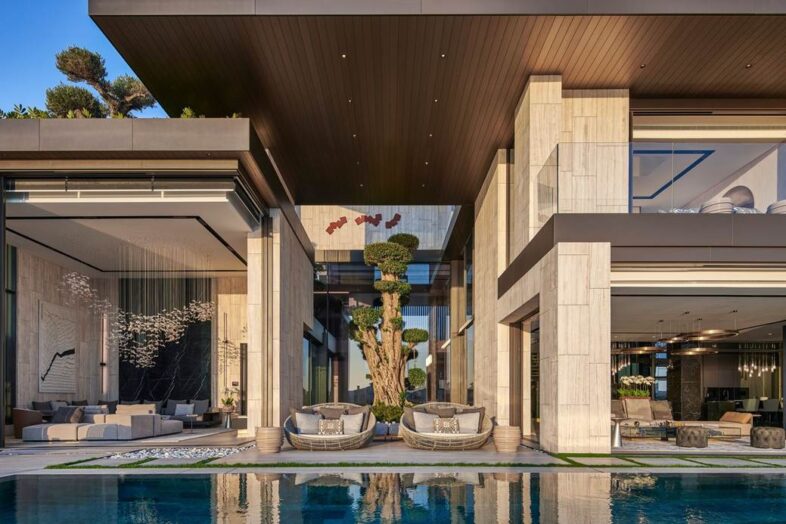
By Kiana Jehangir In Dubai’s ultra-luxury real estate market, $30 million is more than a price tag — it’s an entry point into a world where architecture, interiors, and craftsmanship converge to create living spaces that are as rare as they are remarkable. Behind these homes are visionary architects and interior designers who blend artistry with technical mastery, shaping residences that are both deeply personal and globally desirable. Architecture as a Signature Statement For many of Dubai’s most elite buyers, a home’s exterior is as important as what lies inside. Top architects—often the same names behind cultural landmarks and luxury resorts—approach these residences as bespoke commissions, tailoring every line, proportion, and facade detail to reflect the owner’s tastes and lifestyle. In Emirates Hills, sprawling villas are designed with symmetry and grandeur inspired by European estates, while on Jumeirah Bay Island, sleek, low-profile builds maximize sea views without compromising privacy. Every angle is deliberate, with light studies dictating window placement and landscaping designed to frame architecture like a work of art. Interiors That Tell a Story Inside, the narrative continues. Leading interior designers treat each room as a curated experience, layering textures, tones, and art to create a sense of place. Common features in Dubai’s $30M+ homes include: Designers often work alongside artisans—glassblowers, metalworkers, textile weavers—to deliver details that simply cannot be replicated. Blending Indoor and Outdoor Living One hallmark of these residences is the seamless integration of interiors with Dubai’s dramatic natural landscapes. Infinity pools appear to merge with the horizon, sliding glass walls dissolve boundaries between living spaces and gardens, and shaded terraces extend the usable footprint year-round. This approach not only amplifies views of the skyline, desert, or Arabian Gulf, but also creates spaces that feel both expansive and intimate — a balance that’s difficult to achieve in large-scale luxury homes. Technology You Don’t See While design takes center stage, innovation hums quietly in the background. Discreet smart-home systems control everything from climate to security to ambiance. Acoustic engineering ensures tranquillity, even in properties located minutes from the city’s busiest districts. Sustainability is also a growing focus, with solar integration, recycled water systems, and high-performance glazing becoming standard in the ultra-prime segment. Why Design Drives Value In the $30M+ category, architectural pedigree and design originality can be as valuable as location. A home crafted by a globally recognized architect or featuring one-of-a-kind interiors is not just a residence—it’s a collectible asset. For investors, these design-led properties often command premium resale values and attract an international buyer pool. Our Services Luxury Home Buying: Access a portfolio of design-led residences crafted by the world’s leading architects and interior designers. Luxury Home Selling: Showcase your property’s unique design pedigree to a discerning global audience. Luxury Home Investing: Identify opportunities in high-value homes where design drives long-term appreciation. Property Management: Preserve the aesthetic and functional integrity of your residence through meticulous care. Benefits of Choosing Us