
- April 21, 2026
- 4
- Real Estate
By Kiana Jehangir
In a globalized investment landscape, real estate buyers are continuously comparing major markets to determine where their money works hardest. While traditional powerhouses such as London, New York, Singapore, and Hong Kong have long dominated the conversation, Dubai has emerged as a serious contender — offering not just glamour and growth but also some of the most attractive rental yields in the world.
London: Prestige with Limited Returns
London continues to hold immense prestige and historic value as a global financial capital. However, investors are increasingly questioning its profitability. Prime central London properties can exceed AED 8,100 per square foot, with areas such as Knightsbridge and Belgravia averaging between AED 6,700 and AED 8,900 per square foot.
Stamp duty remains one of the biggest obstacles, reaching between 2% and 12% depending on property value and ownership type, with foreign buyers often paying higher rates. Rental yields in London average between 3% and 4%, and when factoring in maintenance, management costs, and taxes, the net return becomes modest.
While London’s stability and prestige remain unmatched, it offers limited income-generating potential for yield-focused investors.
New York: Global Status, High Barriers
Owning real estate in New York City carries undeniable prestige, but it also comes with one of the highest costs of entry in the world. In Manhattan, average prices hover around USD 1,600 per square foot (approximately AED 5,900). Rental yields for prime properties generally range between 2% and 3%, while outer boroughs such as Brooklyn and Queens can offer slightly better returns of 4% to 7%.
Property taxes in New York are substantial, averaging around 0.88% of the property value annually. High maintenance fees and local taxes further diminish profit margins, making the city more attractive to long-term capital appreciation investors than those seeking strong annual yields.
Singapore: Regulation and Reliability
Singapore’s real estate market is one of the most tightly regulated and secure in the world. Prices for central private condominiums typically exceed AED 6,000 per square foot, while rental yields remain within 3% to 5%.
However, the barriers to entry are significant. Foreign investors face an Additional Buyer’s Stamp Duty (ABSD) of up to 60%, alongside strict financing limits. The market’s stability and liquidity remain strong, but yield potential is limited, and tax costs heavily impact overall ROI.
Hong Kong: Once the Benchmark, Now Plateauing
Hong Kong was once Asia’s crown jewel for real estate investment, but recent years have seen a cooling of its once red-hot market. Prices for central properties remain high, averaging over USD 2,000 per square foot, keeping the city among the most expensive globally.
Rental yields, however, have fallen to around 2% to 3%. While regulatory reforms in 2024 reduced entry barriers by removing several transaction duties, the overall yield performance still lags behind markets offering better cost-to-income ratios.
Dubai: Accessible, Profitable, and Fast-Growing
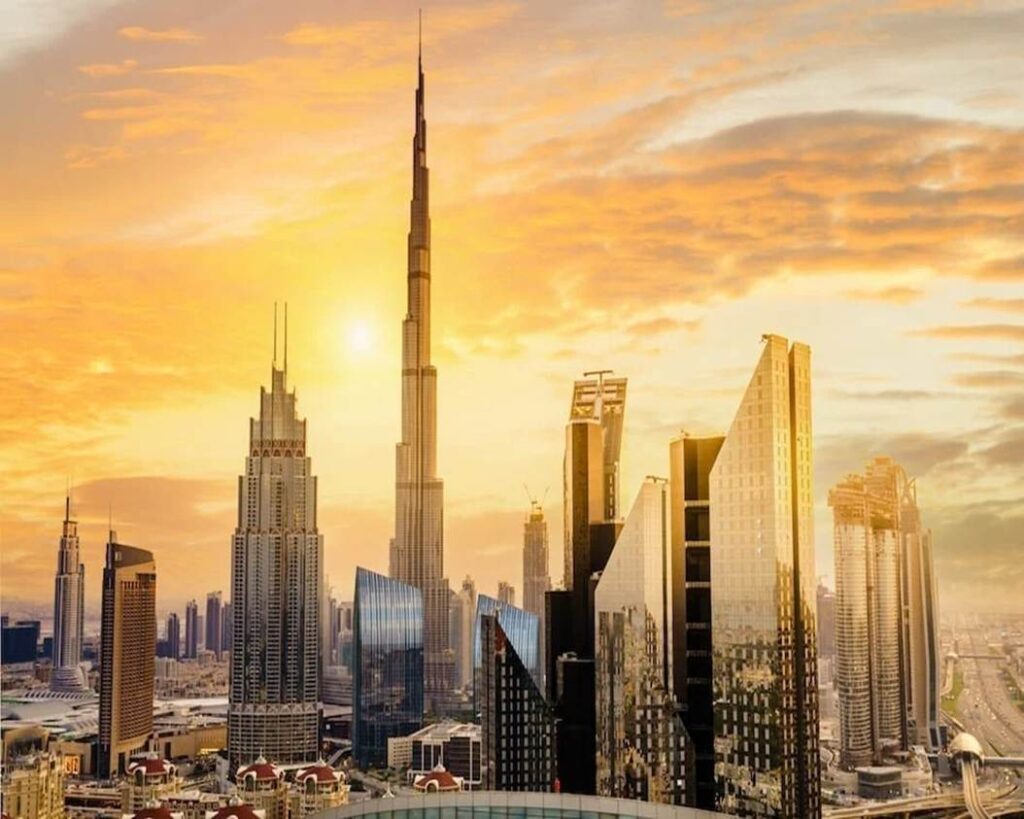
Dubai has rapidly evolved from an emerging market to a mature, high-performing global investment hub. The city’s appeal lies in its combination of strong yields, low taxes, modern infrastructure, and ease of ownership.
Rental Yields
Dubai consistently outperforms global peers in this category. Average yields range from 6% to 8% in mid-tier communities, while high-demand areas such as Jumeirah Village Circle, Business Bay, and Dubai Marina regularly achieve between 6.5% and 10%. For example, an investment of AED 3.65 million can generate annual rental income between AED 257,000 and AED 293,000 — far exceeding what is typical in established markets.
Property Prices
Despite its luxury status, Dubai remains comparatively affordable. Mid-range areas are priced between AED 1,285 and AED 1,652 per square foot, while high-end districts like Downtown Dubai and Palm Jumeirah range from AED 2,868 to AED 3,825 per square foot. For perspective, a budget of AED 1.8 million might purchase a small studio in London or New York but can secure a spacious apartment in Dubai.
Taxes and Fees
Dubai’s property tax regime is one of the most investor-friendly in the world. The main transaction cost is a one-time Dubai Land Department (DLD) fee of 4%, plus minimal administrative charges. There are no annual property taxes, capital gains taxes, or inheritance taxes on real estate, allowing investors to retain more of their returns.
Demand Drivers
Dubai’s growth is supported by powerful structural factors:
- Nearly 90% of its population consists of expatriates, driving long-term rental demand.
- A thriving tourism and hospitality sector continually fuels the short-term rental market.
- A business-friendly ecosystem, global connectivity, and political stability attract corporate tenants and foreign investors.
- Long-term visas and relaxed ownership laws continue to encourage residential investment and relocation.
Why Dubai Outperforms
When compared with London, New York, Singapore, and Hong Kong, Dubai’s advantage is clear. It combines high yields, lower entry prices, minimal taxes, and a fast-growing population with a dynamic economy.
For investors focused on income generation and medium-term capital appreciation, Dubai offers a uniquely balanced opportunity. Yields often double those of mature Western markets, and the absence of ongoing taxes significantly shortens the payback period on investments.
Risks and Considerations
While Dubai’s performance is strong, investors should remain aware of potential risks:
- The market is sensitive to global liquidity and investor sentiment cycles.
- Project quality varies by developer, making due diligence essential.
- Shifts in visa or ownership regulations, while unlikely, can impact future demand.
- Currency fluctuations and macroeconomic factors can affect international returns.
Conclusion
Dubai stands out as one of the few global markets offering both strong income and long-term growth potential. With rental yields averaging 6% to 10%, lower acquisition costs, and zero recurring taxes, the city offers a faster return on investment and a more accessible entry point for global buyers.
While legacy markets such as London and New York remain synonymous with prestige and stability, Dubai represents a new paradigm: a cosmopolitan, tax-efficient, high-yield hub built for investors who prioritize both returns and lifestyle.
