

- April 21, 2026
- 4
- Real Estate
By Kiana Jehangir
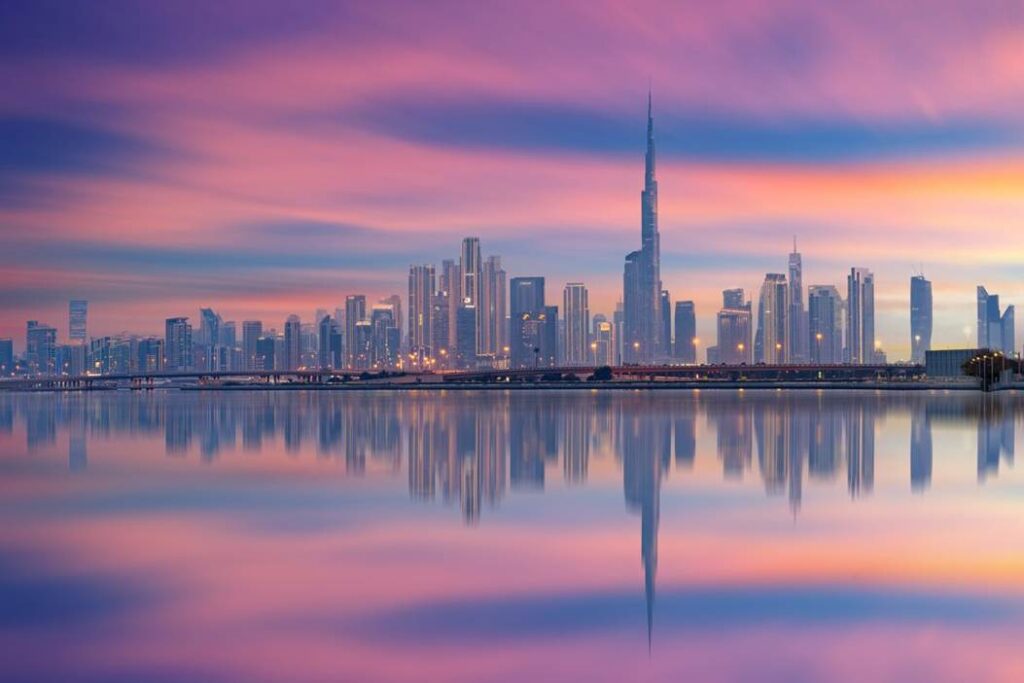
In 2025, Dubai’s real estate market has again broken records. According to Economy Middle East, by the end of the first nine months, sales had approached AED 500 billion (≈ US$136.15 billion), marking a year-on-year increase of about 33.7%. This astonishing performance reflects not just investor enthusiasm but structural shifts in demand, product mix, policy support, and global capital flows.
Here, we walk through the key data, the forces behind the surge, emerging trends, potential challenges ahead, and what this means for investors, developers, and market watchers.
Table of Contents
- Key Figures & Market Snapshot
- What’s Fueling the Surge
- Hot Segments & Locations
- Risks & Headwinds
- Outlook & Strategic Considerations
- Concluding Thoughts
1. Key Figures & Market Snapshot
Sales Value & Growth
- Dubai’s real estate transactions in the first nine months of 2025 soared to nearly AED 500 billion (US$136.15 billion) — up ~33.7% over the same period in 2024.
- This performance builds on strong first-half momentum — in H1 2025, Dubai recorded AED 431 billion in real estate transactions, marking ~25% growth year-on-year.
- In the 8 months to August 2025 alone, Dubai saw AED 441.22 billion in sales across ~137,013 deals, a 33.7% jump vs same period in 2024.
Transaction Volume & Activity
- Transaction volumes have also climbed meaningfully. According to market commentary, over 155,000 property deals were transacted in the first nine months, representing an ~18.5% increase in volume.
- In May 2025 alone, Dubai recorded AED 66.8 billion in sales across ~18,700 deals — a 44% year-on-year increase in value.
Luxury & Ultra-Prime Segment
- Dubai has emerged as a global leader in ultra-prime property (USD 10 million+). In H1 2025, Dubai led global sales in that bracket.
- Luxury price appreciation has been steep: over the past few years, average sale prices (per square foot) have spiked ~68% — another factor drawing high net worth individuals.
2. What’s Fueling the Surge
2.1 Policy & Structural Tailwinds
- Pro-investment regulatory environment: Dubai has steadily enhanced transparency, streamlined registration, and improved ease of doing business in property — raising confidence among foreign and local investors.
- Golden Visa and residency reforms: Incentives that make long-term residency easier encourage property investment over short-term rental speculation.
- Strong demand fundamentals: Population growth, increasing expatriate inflows, and rising household formation all sustain demand for both mid-tier and luxury housing.
2.2 Developer Strength & Presales
- Developers are benefiting from record-level presales. An independent report noted that presales are up ~58% year-on-year, leaving a backlog of ~AED 123 billion yet to be recognized as revenue.
- Many developers have improved their balance sheets: leaner leverage, higher liquidity, and more careful risk management.
2.3 Shift in Buyer Composition
- More new entrants: the share of first-time and foreign investors is rising. In H1, 59,075 new investors entered the market, contributing AED 157 billion in investment.
- Women investors are a rising force: H1 data shows ~AED 73.2 billion in investment from female investors across 34,792 transactions.
- Geographic diversification: Investors from India, the UK, the U.S., Pakistan, and Europe show greater interest in Dubai’s real estate.
2.4 Product Innovation & Branding
- Branded residences, experiential real estate, and luxury amenities remain strong differentiators in the high-end segment.
- Tokenization, digital real estate platforms, and blockchain-enabled transactions are gaining traction (complementing broader trends in Dubai’s digital finance ecosystem).
3. Hot Segments & Locations
Property Types & Segments
- Off-plan / forward sales: Remain a major driver of volume and value — many buyers are buying before project completion.
- Secondary / ready homes: Also showing resilience, especially in high-demand areas.
- Luxury villas & waterfront properties: Demand remains strong in Palm Jumeirah, Arabian Ranches, Dubai Hills, etc.
- Super-prime segment (USD 10M+): Dubai is currently among the top global cities in terms of transaction count and volume in this bracket.
Geographic Hotspots
- Dubai Marina & Business Bay: Among top districts in terms of transaction value in many recent months.
- Palm Jumeirah, Burj Khalifa, Al Yalayis: High-value enclaves drawing luxury demand.
- Emerging zones: Expo City, Dubai Creek Harbour, and new masterplans are gaining investor attention for long-term growth potential.
4. Risks & Headwinds
Despite the impressive trajectory, several risks merit attention:
Supply Overhang & Price Correction
- Ratings agency Fitch warns of a possible double-digit drop (up to 15%) in property prices, citing a surge in supply (210,000 units expected in 2025–26) that could outpace demand.
- Oversupply in secondary, less desirable areas could lead to localized price pressure even if prime locations hold steady.
Project Delays & Delivery Risk
- With many units still under construction, delays can erode buyer confidence, especially among off-plan purchasers.
- Developers must maintain financial discipline and avoid overextension.
Interest Rates & Financing Constraints
- Mortgage caps and regulations (e.g. stricter loan-to-value limits for non-residents or second homes) can restrain leverage and affordability.
- Rising global interest rates or credit tightening could reduce buyers’ capacity or willingness to invest.
Macro & Geopolitical Volatility
- Global economic slowdowns, currency shifts, or shocks in oil markets could weaken investor flows.
- Regional geopolitical tensions always carry some risk premium in capital allocations.
5. Outlook & Strategic Considerations
Near-Term (12–24 months)
- Moderation in price growth: After steep rises, price appreciation may flatten or slightly correct, especially outside prime zones.
- Sustained demand in premium zones: Ultra-prime and branded residences are likely to remain resilient.
- Focus on delivery & execution: Developers who deliver on time, with quality and in strong locations, will be best placed.
Longer-Term (>3 years)
- Population & urbanization tailwinds: Dubai’s 2040 Master Plan anticipates population growth to ~5.8 million, supporting long-term demand.
- Real estate’s role in diversification: The Dubai Real Estate Strategy 2033 aims to increase real estate’s GDP contribution and expand the value of portfolios.
- Digital & tech integration: Tokenization, blockchain, smart property, and PropTech could reshape liquidity, ownership models, and secondary market access.
For Investors & Developers
- Focus on location & quality: Areas with strong amenities, connectivity, and prestige will hedge risks.
- Avoid speculative flipping: Long-term hold or income strategies are more defensible in a maturing cycle.
- Watch regulatory shifts and incentive changes: Policy updates (e.g. visa regime, registration fees, taxation) can materially affect returns.
6. Concluding Thoughts
Dubai’s real estate sector in 2025 has delivered a stunning performance: nearly AED 500 billion transacted in just nine months, double-digit growth in volume, and global leadership in ultra-prime sales. The reasons are multifaceted: favorable policy, structural demand, developer strength, investor diversification, and product innovation.
Yet, this is a market in transition. The risk of oversupply, price moderation, financing constraints, and execution challenges loom. The differentiators in this cycle will be:
- Quality over quantity
- Strong fundamentals over speculative momentum
- Balanced portfolios across segments
- Adaptability to regulatory & digital shifts
If managed well, Dubai’s real estate could transition from boomtown to benchmark — a mature, resilient, globally integrated market that rewards foresight and discipline.
