
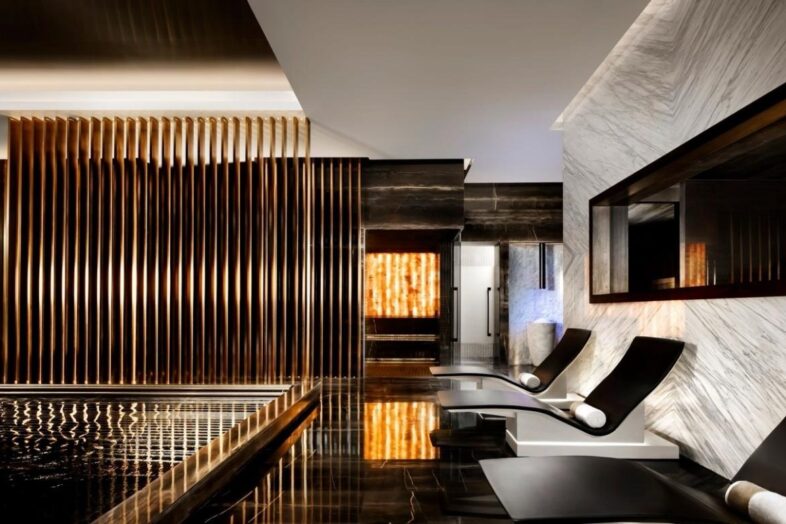
Dubai Real Estate in 2026: How Wellness-Integrated Homes Are Redefining Luxury

- April 2, 2026
- 5
- Real Estate
Dubai’s luxury real estate market is undergoing a clear structural shift. Traditional markers of prestige — location, scale, and visual appeal — are no longer sufficient to define high-end property. Instead, a new framework is emerging, where wellness integration is becoming a central component of residential value.
Recent reporting highlights that developers are increasingly embedding health-focused design into residential projects, reflecting a broader change in buyer priorities.
This shift is not cosmetic. It represents a measurable transition in how luxury is defined, evaluated, and priced within the Dubai property market.
The Shift in Luxury: From Aesthetics to Functionality
Historically, luxury property in Dubai was characterised by:
- Prime waterfront or central locations
- High-end finishes and architectural scale
- Access to exclusive amenities
While these factors remain relevant, they are no longer the primary differentiators.
Developers are now focusing on how homes perform as living environments, including their ability to support:
- Physical health
- Mental well-being
- Long-term lifestyle sustainability
This reflects a broader trend in the UAE, where design is increasingly judged by function, usability, and long-term value, rather than visual impact alone.
What Defines a Wellness-Integrated Home
Wellness in real estate extends beyond traditional amenities such as gyms or spas.
According to current market insights, wellness-integrated homes typically include:
- Enhanced air quality systems and ventilation design
- Natural light optimisation and spatial planning
- Acoustic control and noise reduction
- Access to green spaces and walkable environments
These features are integrated at the design and infrastructure level, rather than added as optional amenities.
In many developments, wellness is embedded into:
- Masterplanning (low-density layouts, green corridors)
- Building systems (air, water, and light quality)
- Community design (walkability, outdoor activity spaces)
This represents a shift from amenity-based luxury to environment-based luxury.
Buyer Behaviour: Demand Driven by Lifestyle and Longevity
The rise of wellness-integrated homes is closely linked to changing buyer behaviour.
Current trends indicate that buyers are:
- Prioritising long-term livability over short-term prestige
- Evaluating how properties support daily routines and health
- Seeking environments that balance work intensity with personal well-being
This is particularly relevant in Dubai, where high-performance lifestyles and long working hours have increased demand for residential environments that offer balance and recovery.
As a result, wellness is no longer viewed as a premium add-on, but as a core requirement in high-end residential decision-making.
Market Performance: Measurable Impact on Value
The integration of wellness features is not only influencing buyer preferences, but also measurable market performance.
Data suggests that wellness-oriented developments:
- Achieve higher occupancy rates
- Command rental premiums of approximately 10–15%
- Experience lower tenant turnover
These outcomes indicate that wellness is increasingly linked to financial performance, not just lifestyle appeal.
For investors, this introduces a new evaluation metric:
Properties that support long-term tenant satisfaction and retention may outperform those defined solely by location or branding.
Developer Strategy: A Structural Market Response
Developers are responding directly to this shift in demand.
Recent projects across Dubai are incorporating:
- Biophilic design principles (integration of nature into built environments)
- Smart technologies supporting health monitoring and environmental control
- Community layouts prioritising space, greenery, and movement
This aligns with a broader industry trend, where wellness is becoming a standard component of new developments, rather than a niche offering.
The pace of adoption in Dubai is particularly notable, with wellness concepts being implemented across both emerging districts and established urban areas.
Urban Implications: Redefining Community Design
The shift toward wellness is also influencing how entire communities are planned.
Emerging development patterns include:
- Lower-density residential layouts
- Integration of parks, trails, and open spaces
- Mixed-use environments combining residential, commercial, and leisure functions
These changes indicate that wellness is no longer confined to individual properties. It is shaping district-level planning and urban design.
In effect, the definition of luxury is expanding from the unit to the community ecosystem.
Market Positioning: Dubai in a Global Context
Dubai’s rapid adoption of wellness-integrated real estate places it within a broader global trend.
Across international markets, there is increasing emphasis on:
- Health-focused residential environments
- Sustainable and resource-efficient design
- Long-term livability as a value driver
However, Dubai’s advantage lies in the speed of implementation. Wellness concepts are being incorporated into large-scale developments at a pace that is reshaping the overall market structure.
This positions Dubai as a leading market in the evolution of lifestyle-driven real estate.
Investment Considerations in 2026
For investors, the shift toward wellness introduces new criteria for evaluating property.
Key considerations include:
- Integration of wellness features at the design level, not just amenities
- Location within masterplanned communities prioritising livability
- Long-term tenant demand linked to lifestyle quality
- Potential for rental premiums and reduced vacancy
As the market becomes more selective, properties lacking these characteristics may face slower absorption and reduced competitiveness.
The Noble House Perspective
The rise of wellness-integrated homes reflects a broader transition in Dubai’s real estate market — from asset-driven luxury to experience-driven living.
This shift is supported by:
- Changing buyer expectations
- Developer adaptation
- Measurable performance outcomes
For market participants, the implication is clear:
Luxury is increasingly defined by how a property functions over time, rather than how it presents initially.
In 2026, the strongest-performing assets are likely to be those aligned with long-term livability, health, and sustainability, as these factors continue to shape demand across the market.
